



How Do I Prepare for an IELTS Speaking Test?
Table of Contents
TL;DR: How Do I Prepare for an IELTS Speaking Test?
Preparing for the IELTS Speaking Test (2026) is about building confidence, communication skills, and natural fluency, not memorizing scripts. This guide walks you through the test format, preparation phases, common challenges, and strategies to help you express yourself clearly and comfortably. With consistent practice and calm focus, you can approach the test confidently and perform effectively.
How Do I Prepare for an IELTS Speaking Test?
Preparing for the IELTS Speaking Test can feel nerve-wracking, like standing on the edge of a diving board, unsure when to jump. If that sounds familiar, take a breath. You’re not alone. Almost everyone feels nervous before this test, but with the right preparation, it becomes manageable and even enjoyable.
The IELTS Speaking Test isn’t about memorizing perfect lines; it’s about expressing ideas naturally and clearly. In this guide, we’ll walk through everything: the test structure, preparation tips, and strategies to help you perform well in 2026.
Understanding the IELTS Speaking Test Format
The IELTS Speaking Test evaluates how naturally and accurately you communicate in English. It lasts around 11–14 minutes, divided into three parts:
- Part 1: Introduction and Interview (4–5 minutes)
You’ll answer personal questions about familiar topics like hobbies, work, or studies. It’s conversational and meant to ease you in. - Part 2: The Cue Card (3–4 minutes)
You’ll receive a topic card, get one minute to prepare, and then speak for one to two minutes. Afterwards, the examiner may ask a couple of related questions. - Part 3: Two-Way Discussion (4–5 minutes)
You’ll discuss broader ideas related to the cue card topic, giving opinions and examples to show your reasoning.
The test evaluates:
- Fluency and Coherence: smooth and logical communication.
- Lexical Resource: vocabulary range and accuracy.
- Grammatical Range and Accuracy: Use of varied structures correctly.
- Pronunciation: clarity and natural rhythm.
Understanding this structure is the first step to effective preparation.
Be Yourself, Not a Script
Many test-takers make the mistake of memorizing answers. Examiners can easily recognize rehearsed speech. IELTS values genuine, natural communication, so:
- Speak as you normally would in daily life.
- Use pauses naturally: Let me think for a second.
- Stay relaxed: smiling can help with voice tone.
- Don’t fake an accent. Clear speech matters more than imitation.
Treat the examiner like someone genuinely interested in your thoughts and experiences.
Create a Realistic Preparation Plan
Phase 1: Build a Foundation (4–6 weeks before the test)
Focus on consistency:
- Speak English daily, talk about your day or interests.
- Listen to English content (podcasts, videos, and shows).
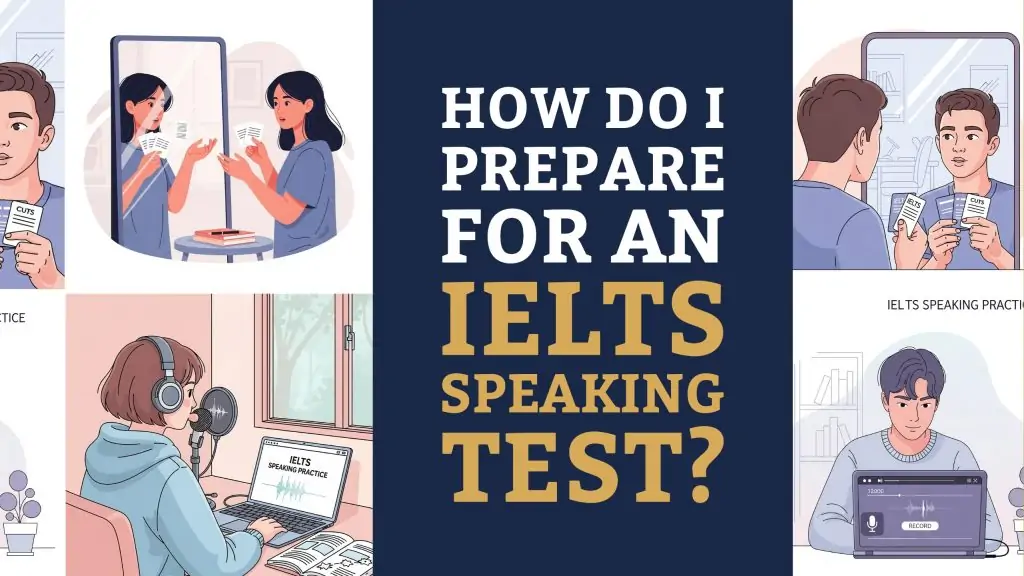
- Record yourself speaking for two minutes on random topics.
- Keep a vocabulary journal for new words.
- Practice cue cards using a timer.
This phase is about comfort, not perfection.
Phase 2: Practice and Feedback (2–3 weeks before the test)
- Take mock tests and record yourself.
- Seek feedback from a teacher or fluent speaker.
- Focus on frequent IELTS topics like education, family, and technology.
- Use connectors like for example or on the other hand.
- Avoid memorizing entire responses.
Phase 3: The Final Week
- Keep practicing light and focus on staying calm.
- Sleep well the night before.
- On test day, treat it like a friendly conversation.
- If you forget something, recover naturally: That’s an interesting question; I haven’t thought about it before
Improving IELTS Speaking Skills
1. Fluency and Coherence
Speak smoothly, not quickly.
- Avoid fillers like uh or umm.
- Use linking phrases naturally.
- Practice storytelling to build flow.
2. Vocabulary (Lexical Resource)
Use varied but natural language.
- Replace common words with simple synonyms.
- Learn vocabulary related to common IELTS themes.
- Avoid forcing complex words.
3. Grammar
- Use a mix of short and long sentences.
- Practice different tenses (past, present, and future).
- Self-correct politely if needed.
4. Pronunciation
- Focus on clarity and rhythm.
- Read aloud regularly.
- Practice stress and intonation patterns.
How Do I Prepare for an IELTS Speaking Test? Strategies for Every Part
Part 1: The Introduction
Relax and answer naturally.
Example:
Question: Do you enjoy reading?
Answer: Yes, I really do. Reading helps me relax, and I usually enjoy novels or articles about personal growth.
Part 2: The Cue Card
Organize your thoughts quickly.
Structure:
- Introduction: What you’ll talk about.
- Details: Who, what, when, where.
- Feelings or reflection: Why it matters to you.
Part 3: The Discussion
Focus on opinions and examples.
- Answer → Reason → Example → Conclusion.
- Take a moment to think before responding.
- Speak calmly and clearly.
Common Mistakes to Avoid
- Memorizing responses word-for-word.
- Giving short, one-line answers.
- Using unfamiliar advanced words incorrectly.
- Ignoring pronunciation and pacing.
- Panicking after a small mistake, self-correct and continue.
Remember: IELTS assesses your ability to communicate, not perfection.
Useful Practice Resources
For structured preparation and expert guidance, you may consider the Preparatory Course for International English Language Testing System (IELTS) by United Ceres College.
This course provides comprehensive practice, mock interviews, and strategies to help students improve fluency and confidence.
(Information provided for reference; students are advised to verify course details directly with the institution.)
Test Day Tips
- Arrive early and stay calm.
- Warm up your voice by speaking English before the test.
- Maintain polite eye contact.
- Ask for clarification if needed.
- End with a simple thank you to the examiner.
Nervousness is normal; it shows you care.
My Honest Advice
No one feels completely ready for IELTS. The key is consistency; a few minutes of daily speaking practice is more effective than long, infrequent sessions.
You’ll improve when you stop aiming for perfection and start focusing on expressing yourself clearly. The examiner wants to hear your ideas, not flawless English.
Wrapping It Up
Preparing for the IELTS Speaking Test is about developing real communication skills. When you treat English as a living language rather than a set of rules, fluency grows naturally.
Keep practicing, stay authentic, and approach the 2026 IELTS test with calm confidence.
For guided learning, explore courses such as United Ceres College IELTS preparatory program, designed to help you speak clearly and confidently in all sections of the test.
How can I improve my fluency for the IELTS Speaking Test?
Practice speaking daily without focusing too much on grammar. Record yourself or practice with friends to gain fluency and confidence.
What kind of topics are usually asked in IELTS Speaking?
Topics cover everyday themes like hobbies, travel, and education, as well as broader issues like technology or the environment.
Should I use a British or American accent in IELTS?
Either is acceptable; clarity and natural tone matter more than accent.
How long should my answers be in Part 1?
Two to three sentences are ideal. Avoid one-word replies or long speeches.
Is it okay to ask the examiner to repeat a question?
Yes, politely say, Could you please repeat the question? It’s perfectly acceptable and shows confidence.