



Is AEIS a Ministry of Education Exam? Clearing Up the Confusion
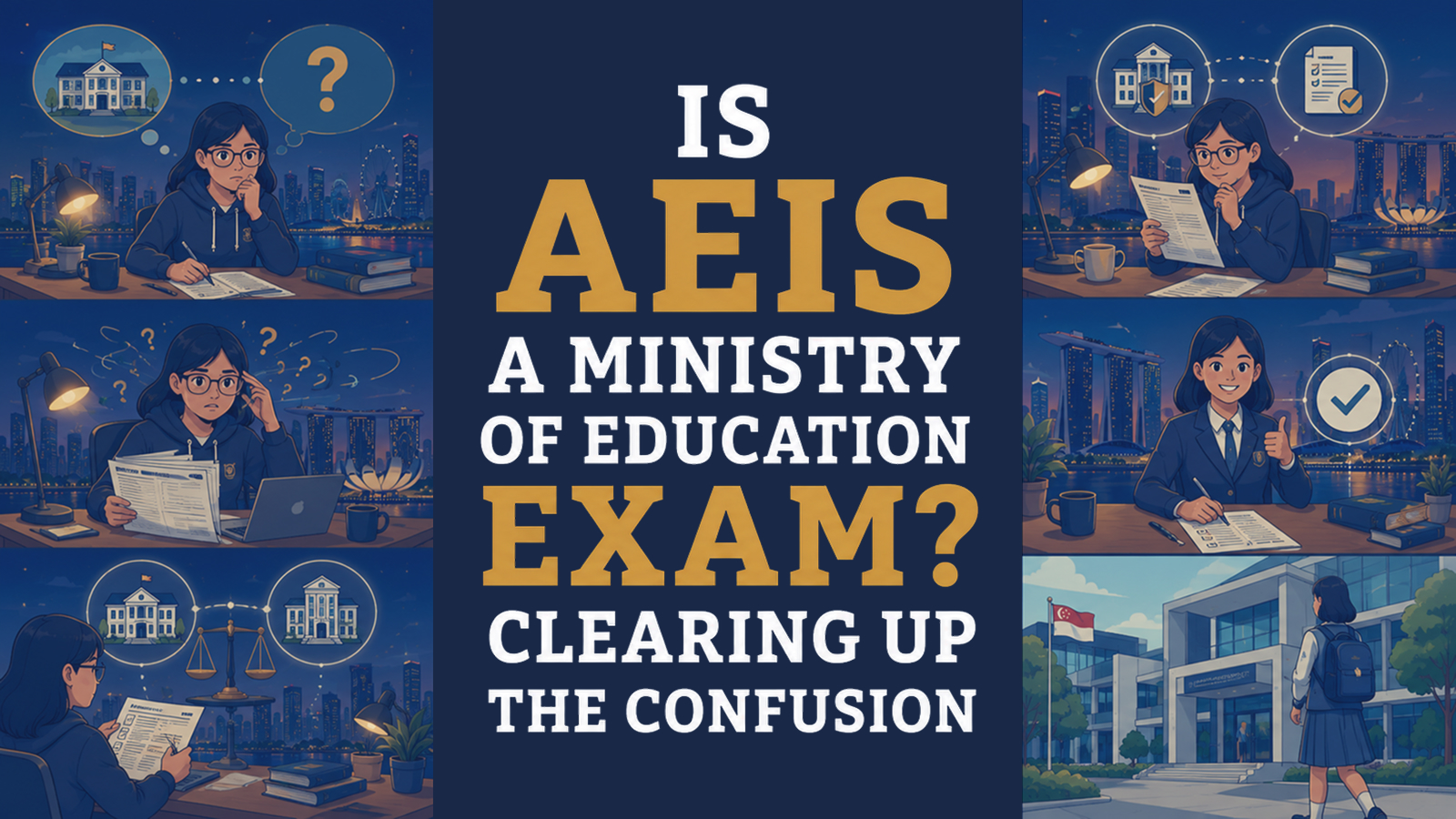
Table of Contents
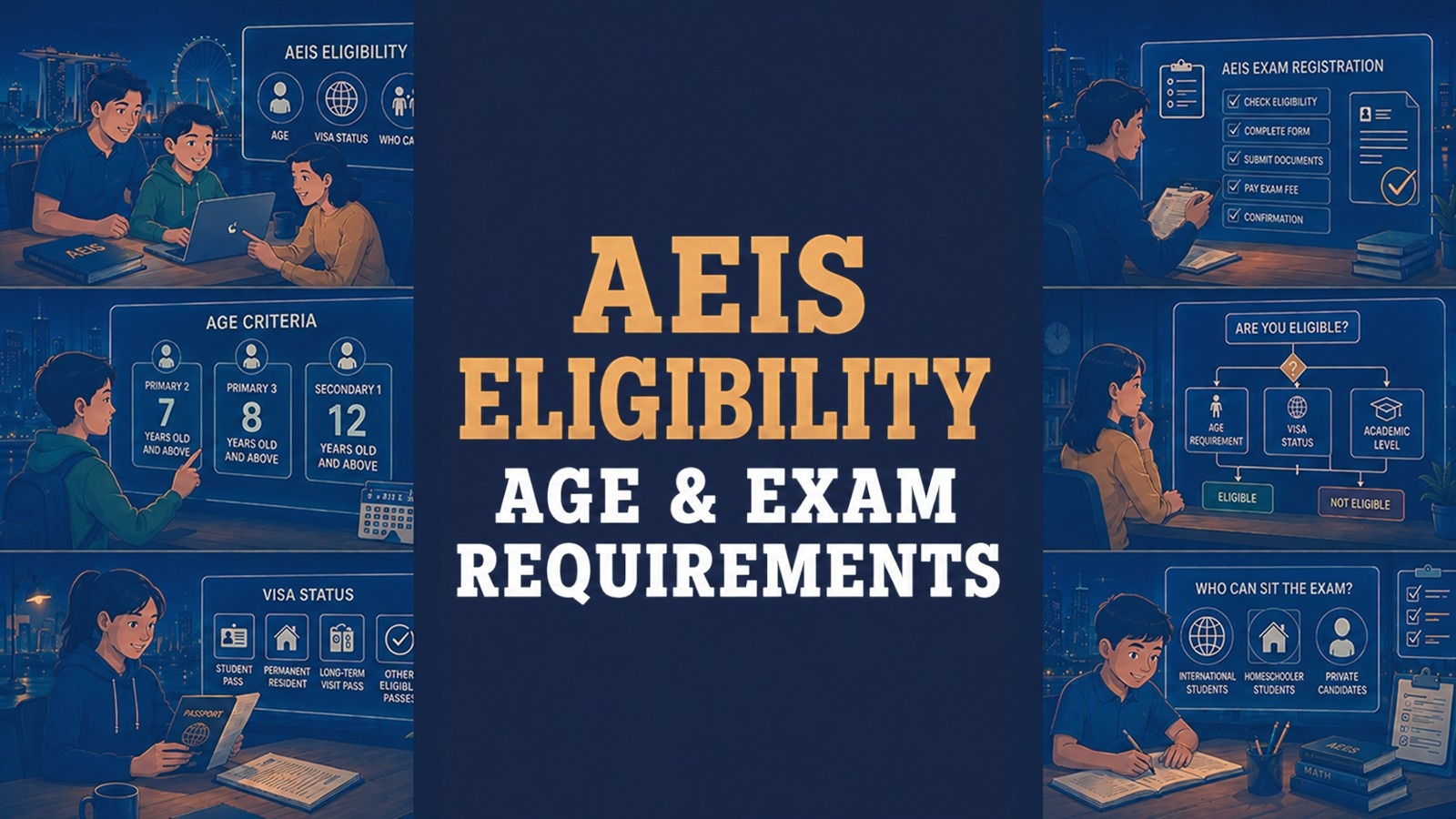

TL;DR: Is AEIS a Ministry of Education Exam?
- AEIS (Admissions Exercise for International Students) is an entrance examination conducted by Singapore’s Ministry of Education (MOE) for international students seeking admission to mainstream primary and secondary schools. It is an admissions test, not a regular school examination.
- The exam assesses English language proficiency and Mathematics skills based on Singapore’s school curriculum to determine whether students meet the academic requirements for school placement. Institutions such as United Ceres College also help students prepare for these subjects through structured AEIS preparation programs.
- Passing AEIS does not guarantee admission to a preferred school. The MOE assigns successful applicants to schools based on available vacancies and its official placement process.
- Success in AEIS depends on understanding the exam format, strengthening English and Mathematics skills, preparing strategically, and avoiding common misconceptions about the exam, school assessments, and tuition programs.
- The latest AEIS eligibility requirements can be found on the official MOE website.
Many international families researching education options in Singapore often come across the term “AEIS” and wonder, “Is AEIS a Ministry of Education exam?” The answer is yes. The Admissions Exercise for International Students (AEIS) is conducted by Singapore’s Ministry of Education (MOE) as part of the admission process for international students who wish to enter Singapore’s mainstream primary and secondary schools.
However, AEIS is not the same as a normal school examination. It is not a test students take during their school years to receive grades or academic certificates. Instead, it is an admission assessment designed to evaluate whether international students have the academic readiness required for Singapore’s education system. Understanding what AEIS is, how it works, and what it measures can help parents and students make better decisions about preparation.
Is AEIS a Ministry of Education Exam?
What Is AEIS?
The Admissions Exercise for International Students (AEIS) is a centralized admissions exercise managed by Singapore’s Ministry of Education. It is designed for international students who want to apply for admission into Singapore government primary and secondary schools.
Unlike most local students, who generally progress through Singapore’s education system via established admission pathways, eligible international students applying to mainstream government schools may be required to participate in AEIS.
The assessment helps MOE evaluate whether applicants have the necessary academic foundation to adapt to Singapore’s curriculum. AEIS mainly focuses on two key areas:
- English language proficiency
- Mathematics knowledge and problem-solving skills appropriate to the student’s intended entry level
These subjects are important because they form the foundation of learning across Singapore’s education system.
Is AEIS an MOE Exam?
Yes, but it is different from school examinations. One common misunderstanding is that AEIS is similar to national examinations such as school-level assessments or graduation exams.
The main difference is the purpose of the examination.
| AEIS | Regular School Examination |
| Used for admission purposes | Used to assess students during school years |
| Conducted for international student applicants | Taken by enrolled students |
| Evaluates readiness for placement | Measures academic progress |
| Managed by MOE as an admissions exercise | Managed by schools or examination authorities |
AEIS does not determine a student’s final academic qualification. Instead, it helps determine whether a student may be considered for placement in a Singapore government school.
Why Does Singapore Have AEIS?
Singapore’s education system follows a structured curriculum with specific learning expectations at different levels. For international students entering the system, schools need a way to understand whether applicants have the required academic foundation. AEIS helps create a standardized process for assessing applicants from different educational backgrounds. For example:
A student from another country may have studied Mathematics topics in a different order or may have followed a different curriculum. AEIS provides a common assessment method to understand the student’s current level.
What Does AEIS Test?
AEIS focuses mainly on English and Mathematics, as these subjects are essential for students joining Singapore schools.
English Language
English is important because it is the main language used for teaching most subjects in Singapore schools. The English component may assess skills such as:
- Reading comprehension
- Understanding written passages
- Language use
- Vocabulary
- Grammar
Students need more than memorising words. They need to understand how English is used in academic situations.
Example:
A student may know basic English vocabulary but still struggle to understand a Mathematics question written in English. Strong language skills help students understand classroom instructions and learning materials.
Mathematics
The Mathematics component evaluates whether students understand concepts suitable for their intended academic level. Topics may include areas such as:
- Numbers and calculations
- Algebra concepts
- Problem-solving
- Measurement
- Data interpretation
The focus is not only on remembering formulas but also on applying concepts to solve problems.
Example:
Instead of asking only: “What is 25 × 4?”
A question may require students to understand a real-life situation and decide which calculation method is appropriate.
Common Misunderstanding: “Passing AEIS Guarantees School Admission”
The Reality
Passing AEIS does not mean a student can automatically choose any school or receive guaranteed admission. After assessment, placement depends on factors such as:
- Test performance
- Available school vacancies
- Student’s eligibility
- MOE’s placement process
This means students and parents should view AEIS as an important step in the admission process, not an automatic guarantee of placement.
Common Misunderstanding: “AEIS Is Only About Memorising Answers”
The Reality
AEIS preparation requires understanding concepts rather than memorising information. Students need to develop:
- Reading skills
- Problem-solving ability
- Mathematical understanding
- Time management
- Exam techniques
For example, a student preparing for AEIS Mathematics should practice solving different types of questions instead of only memorizing formulas.
Why Do Students Find AEIS Challenging?
Many international students find AEIS challenging because they are adjusting to a different academic environment. Common challenges include:
Different Curriculum Expectations
Students may come from education systems where topics are taught at different levels or in different sequences. A Mathematics concept that is introduced earlier in Singapore may be unfamiliar to some students.
English Language Adjustment
Even students who can communicate in English may find academic English more challenging. Understanding textbooks, exam questions, and classroom discussions requires strong language skills.
Time Management
AEIS questions often require students to complete tasks within a limited timeframe. Students need practice managing their time while maintaining accuracy.
AEIS Preparation: What Should Students Focus On?
Effective preparation usually involves building strong foundations rather than only practicing past questions. Students may benefit from focusing on:
1. Understanding the Singapore Curriculum
Learning what topics are covered at different levels helps students identify knowledge gaps.
2. Improving English Skills
Regular reading, vocabulary development, and comprehension practice can support better performance.
3. Strengthening Mathematics Fundamentals
Students should focus on understanding concepts and applying them to different problems.
4. Practicing Under Exam Conditions
Timed practice can help students become familiar with the pressure of completing questions within a set duration.
The Role of AEIS Preparation Programmes
Many students and parents consider AEIS preparation programs because the Singapore education system may be different from what students are familiar with in their home countries. A structured preparation program may help students:
- Understand the AEIS exam format
- Identify areas that need improvement
- Practise English and Mathematics skills
- Develop exam strategies
- Build confidence through regular practice
However, preparation programs should not be viewed as a guarantee of passing AEIS. Individual outcomes depend on factors such as a student’s current academic level, preparation time, consistency, and personal effort.
The purpose of preparation is to provide guidance and support while helping students become more familiar with the expectations of the assessment.
Who Should Consider AEIS Preparation?
AEIS preparation may be suitable for international students who:
- Plan to apply for Singapore government primary or secondary schools
- Need support adjusting to the Singapore curriculum
- Want to strengthen their English and Mathematics foundation
- Need guidance on exam techniques and practice methods
For example, a student who has studied Mathematics in another country may understand basic concepts but may need practice with Singapore-style problem-solving questions. Similarly, a student with conversational English skills may still need support with academic reading and comprehension.
How Is AEIS Different From Other International School Admissions?
Parents sometimes confuse AEIS with private school admission tests or international school applications. Understanding the difference can help families choose the right pathway.
| AEIS | International School Admission |
| Managed through Singapore’s Ministry of Education | Managed by individual schools |
| For entry into mainstream government schools | Usually for private or international schools |
| Follows Singapore curriculum expectations | May follow different international curricula |
| Focuses mainly on English and mathematics. | Requirements vary by school |
The right option depends on a family’s educational goals, budget, preferred curriculum, and long-term plans.
Practical Tips for Students Preparing for AEIS
Preparing for AEIS requires planning and consistency. Students may find the following approaches helpful:
Start Early
Beginning preparation earlier allows students more time to strengthen weak areas without feeling overwhelmed.
Build English Through Daily Practice
Students can improve academic English by:
- Reading English books and articles
- Learning new vocabulary
- Practicing comprehension exercises
- Writing regularly
Practise Mathematics Regularly
Instead of studying only before the exam, students can improve gradually by practicing problem-solving questions consistently.
Understand Mistakes
Reviewing incorrect answers is an important part of learning. Students should understand why an answer was wrong and learn the correct approach.
Develop Exam Confidence
Regular practice tests can help students become familiar with exam timing and reduce stress.
Questions Parents Should Ask Before Choosing AEIS Tuition
With many preparation options available, parents should carefully evaluate programs before making a decision. Useful questions include:
Does the program follow the Singapore curriculum?
A program familiar with Singapore’s academic expectations may better support students preparing for AEIS.
Does it focus on understanding or memorization?
Strong preparation should help students develop problem-solving and language skills rather than only memorising answers.
Are students given feedback?
Regular feedback can help students identify areas for improvement.
Does the program match the student’s current level?
Every student has different learning needs. A suitable program should consider the student’s academic background and goals.
Common Misconceptions About AEIS
“AEIS Is Only for Students Who Are Not Good Enough Academically”
The Reality
AEIS is not about whether a student is naturally good or bad at academics. It is an assessment designed to understand whether an international student is prepared for Singapore’s education system. Students from different backgrounds may take AEIS as part of their education journey.
“Speaking English Fluently Means AEIS English will be easy.”
The Reality
Conversational English and academic English are different. A student may communicate well in daily situations but still need practice with reading comprehension, vocabulary, and written language.
“A High Score Guarantees a Specific School”
The Reality
AEIS results are part of the placement process, but school placement depends on multiple factors, including available vacancies and MOE’s assessment process.
Why Understanding AEIS Matters for International Students
Moving to a new education system is a major decision for students and families. Understanding AEIS helps students prepare realistically and avoid confusion about:
- Admission requirements
- Exam expectations
- Preparation methods
- School placement processes
Good preparation is not only about preparing for the examination. It is also about developing the English language proficiency, mathematical understanding, and learning habits needed to adapt to Singapore’s education system.
Supporting Students Through Structured Learning
Choosing the right learning support can make the preparation journey more organized. Students may benefit from programs that provide:
- Curriculum-based learning
- Regular practice opportunities
- Academic guidance
- Individual feedback
- Support with English and Mathematics development
At United Ceres College, programs are designed to support students through structured learning experiences and help them develop knowledge, subject foundations, and familiarity with the expectations of AEIS. Students preparing for educational pathways in Singapore may explore learning options that focus on practical understanding, subject foundations, and confidence-building. The goal of effective preparation is to help students become more familiar with academic expectations and develop skills that support their continued learning journey.
Final Thoughts
AEIS is a Ministry of Education admissions exercise designed to help assess international students who want to enter Singapore’s mainstream primary and secondary schools. While the exam may seem confusing at first, understanding its purpose can make the process easier for students and parents. AEIS is not simply a test of memorisation or intelligence. It evaluates whether students have the English and Mathematics foundation needed to adapt to Singapore’s education system.
Successful preparation involves understanding the curriculum, practicing regularly, improving language skills, and developing confidence over time. For families considering AEIS, exploring exam requirements, preparation options, and learning support can help students make informed decisions about their education pathway in Singapore.
Frequently Asked Questions (FAQs)
1. Is AEIS conducted by Singapore’s Ministry of Education?
Yes. AEIS is conducted by Singapore’s Ministry of Education as an admissions exercise for international students applying for placement in mainstream primary and secondary schools.
2. Is AEIS the same as a school examination?
No. AEIS is an admission assessment, not a regular school examination. It is used to evaluate whether international students are suitable for placement in Singapore schools.
3. What subjects are tested in AEIS?
AEIS mainly assesses English language and Mathematics skills. The level tested depends on the student’s intended school level.
4. Does passing AEIS guarantee admission to a specific school?
No. Passing AEIS does not guarantee admission to a particular school. Placement depends on factors such as test performance, eligibility, and available vacancies.
5. How early should students prepare for AEIS?
Preparation time depends on the student’s current academic level. Starting early can provide more time to improve English, Mathematics, and exam skills.
6. Can students without a Singapore education background prepare for AEIS?
Yes. Many international students prepare for AEIS while coming from different education systems. Understanding the Singapore curriculum and practicing relevant skills can help them adjust to the assessment format.