



Kang Shi-kyu’s AEIS Journey in Singapore: A Story of Small Wins and Solid Prep

Table of Contents


Chapter 1. The suitcase and the timetable
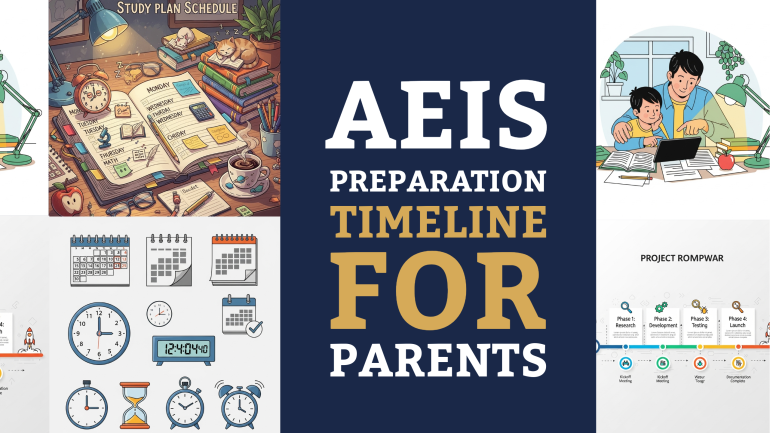
When Kang Shi-kyu stepped into the two bedroom flat in Toa Payoh, the rain had already started. His mother folded the travel receipt into a square and tucked it into a plastic folder marked Documents. His father stood by the window, checking bus routes on his phone. On the table sat a new A4 notebook titled, AEIS Plan.
Shi-kyu wrote the date. He listed two subjects, English and Mathematics, and under each one he wrote three words, read, write, solve. It was not a fancy plan, but it was the first time his tasks had looked small enough to start. He had come from a system where marks were neat and predictable. AEIS felt different, tougher English, fast Maths, none of his old shortcuts would carry him now.
That night he asked the question that most international students ask, is AEIS only about the test. His mother shook her head. No, it is about proving you can learn in English every day, not just for two hours. So we will practise how you will learn in school, one page at a time.
Chapter 2. The library rule
The next morning, the family walked to the community library. They borrowed a stack of reading, short non fiction pieces, a science magazine, a book of essays that looked difficult but interesting. The librarian smiled at Shi-kyu’s careful choice of pens, one black for answers, one blue for notes. He felt like a proper student again.
He set two rules for English. First, every paragraph gets a one line gist. Second, every new word must appear in two sentences, one formal, one everyday. He read about coral reefs and urban planning. He underlined signal words, however, although, finally, therefore. He wrote short summaries, 120 words at most. At first his sentences sounded like translated thoughts, wooden and safe. By the end of the week they were clearer. He was not trying to be clever, only precise.
For writing, he built a small ritual. Five minutes to plan. A simple structure, a clear claim, two reasons, one example each, a short closing insight. He stopped chasing big words and chased clear ones instead. When he finished a piece, he marked verbs in a different colour and checked for tense drift. It felt slow, then it felt reliable.
Chapter 3. The clock and the careless mark
Maths felt more familiar. Ratios, percentages, area, speed. Yet the papers were unforgiving. One skipped unit could cost marks. One misread could break a chain of working. So Shi-kyu kept an error journal. Every mistake got a tag, careless, concept, or strategy. He noticed a pattern. Many wrong answers were not about understanding, they were about pace and layout. He started to write a unit at the end of each line, not only at the end of the question. It looked fussy. It saved points.
He set a rough pace rule for AEIS Maths, one mark per minute as a starting guide, then adjust. For tough questions he used estimation first. If a ratio question looked like it should land near 40, and his working spilled out a 400, he knew to backtrack before wasting more time. He drew more diagrams. Rates became arrows on paper. Geometry became shapes with labels. Word problems became little scenes he could picture.
Chapter 4. The first mock
Three weeks in, he sat a full mock. English first, then Maths. He timed his breaks. He drank water at set intervals, not when he felt like it. He told himself, try the paper, do not judge the paper. The result was honest and mixed. Comprehension was fine, inference was shaky. Writing had structure, but the conclusion was thin. Maths was strong in number and algebra, weaker in speed problems.
They had twelve weeks to go. His mother said, do not add hours, add accuracy. His father printed another set of papers and a calendar. They circled the most fragile skills, inference in English, multi step problems in Maths. They did not celebrate the strong areas, they maintained them. This kept his confidence steady and his time budget focused.
Chapter 5. The teacher’s note
A neighbour introduced them to a teacher who offered one hour a week to read Shi-kyu’s compositions and return honest comments. The first note read, you write like a careful Maths student, which is good, but your examples feel safe. Try one real detail each time, a place, a number, a short scene. He did not need more grammar exercises, he needed proof in his paragraphs.
So he added a line in every body paragraph that sounded like a real life moment. If he wrote about change, he mentioned the exact bus number he had learnt to take. If he wrote about teamwork, he recalled the time he translated for a new classmate at a football trial. The writing felt less like an exam and more like a person telling a clean story. Marks followed.
Chapter 6. The middle dip
Week seven felt heavy. The novelty had gone. The gains were smaller. A timed paper on Thursday came back with silly slips. He wanted to do three papers a day to make up for it. His mother said no. When you miss a step, do not run faster, fix the step. They cut volume for three days and tightened process. Five minute plans, line by line working, unit labels, keyword underlines, a quick estimate before a long calculation.
They also built a small habit, one page of reading before bed, anything, science, biography, current affairs. He did not analyse those pages. He simply read and noticed how sentences carried ideas. The next morning his summaries were sharper again. Small steps, solid ground.
Chapter 7. The placement puzzle
The family sat down to discuss where AEIS might place him. Age and performance mattered, but vacancies mattered too. They could not control the last one. They looked at bus routes, school locations, level options. They wrote a short list of acceptable outcomes, Primary 5 or Secondary 1, within a reasonable commute. This removed the silent anxiety that often creeps in when students believe only one result will count as success. It also helped them answer the question many families face, are we prepared for a realistic range of placements.
Chapter 8. The final four weeks
The last month turned from building to rehearsing. Two full mocks each week, strict timing, English first on one weekend, Maths first on the next. Review sessions were targeted. For English, he checked inference answers by pointing to the exact lines that supported each choice. If he could not find the line, he had guessed. For Maths, he coded each error and rewrote the solution within twenty four hours.
He produced a one page formula sheet and a one page grammar sheet. The formula sheet held ratios, percentage change, average speed, area and volume formulas, common conversions. The grammar sheet held tense consistency, subject verb agreement, article use, and common connectors. He read both pages daily, not to learn new things, to keep known things close.
Seven days before AEIS, they reduced load. They switched to light drills and sleep. He kept writing, but shorter pieces with focus on clarity. He did not chase last minute tricks. He chased steady routines, bag packed, documents ready, bus route checked, reporting time fixed.
Chapter 9. The exam day
The hall felt cooler than he expected. He took the English paper, wrote the date, and breathed. He remembered the library rule, one line gist per paragraph. He underlined signal words to keep the flow in view. In writing, he planned for five minutes, wrote two calm body paragraphs with a real detail each, and closed with a clear final sentence, not a grand one, a clear one.
Maths came and he followed his marks per minute guide. When a question dragged, he marked it and moved on. He checked units as he wrote, not at the end. On the last page he caught an estimate that saved him from a slip. He felt tired, not defeated.
They walked out into a bright afternoon. His mother asked if he had done what he had practised. He nodded. That was enough for the day.
Chapter 10. The result and the next step
When the placement email arrived, it was not the top choice, but it fit the plan, a reasonable level, a workable commute. They smiled because the outcome matched the range they had accepted weeks earlier. They thanked the neighbour, returned the library books, and wrote a new title on the A4 notebook, First Term Plan.
Shi-kyu’s AEIS story does not end at the result. It continues in classrooms where the same habits matter, a clear gist, proof in writing, units in Maths, a calm pace, and small wins repeated often.
Practical takeaways from Kang Shi-kyu’s AEIS story
- Build habits that mirror real school, daily English reading, weekly composition, steady Maths working with units and diagrams.
- Keep an error journal. Tag mistakes as careless, concept, or strategy. Fix the process, not only the answer.
- Use a five minute plan for writing, claim, two reasons, one example each, clean close.
- Pace Maths by marks, estimate first, label units throughout, move on when stuck, return with fresh eyes.
- Prepare for a range of placements. Decide what outcomes are acceptable before results day.