



Business Diploma Admission Requirements Singapore
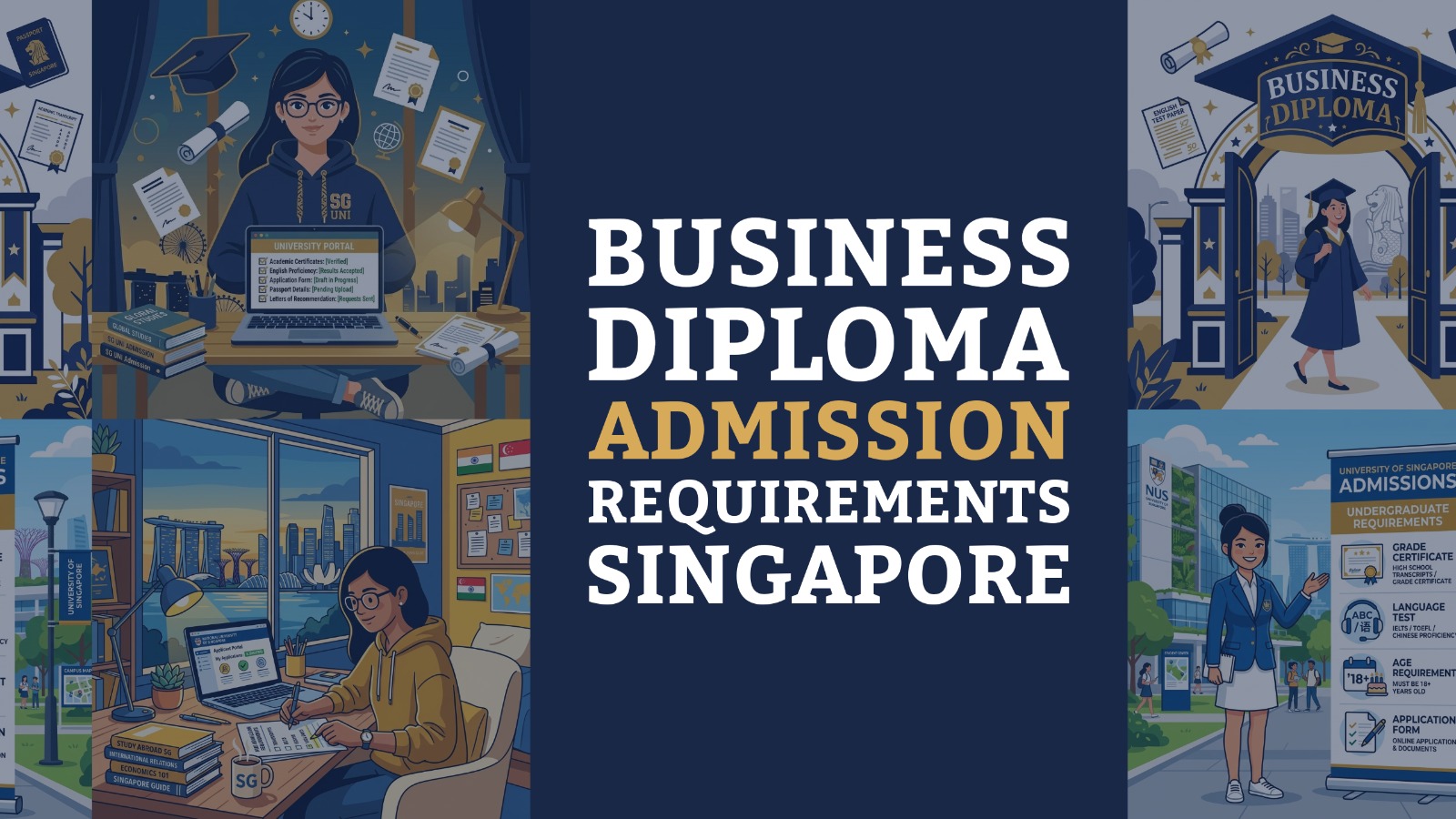
Table of Contents
TL;DR: Business Diploma Admission Requirements Singapore
- Business diploma programs in Singapore usually require academic qualifications like O-Levels, high school certificates, or equivalent international credentials.
- Depending on the institution, applicants may be required to demonstrate English proficiency through IELTS, an internal English placement test, or other accepted English qualifications.
- Some colleges accept mature students with work experience even if they do not meet standard academic pathways.
- Required documents often include transcripts, passport copies, application forms, and passport-sized photos.
- Singapore remains one of Asia’s top destinations for business education because of its international business environment and multicultural economy.
- Institutions like United Ceres College focus on practical, industry-relevant business education pathways for local and international students.
- A business diploma may support progression into business-related roles depending on an individual’s qualifications, work experience, employer requirements, and labour market conditions.
Business Diploma Admission Requirements Singapore
There’s something oddly stressful about applying for college. Even when students know exactly what they want to study, the admission process can still feel confusing. Different qualifications. Different documents. Different rules depending on where you come from. Sometimes it feels like you need a separate diploma just to understand the application checklist itself. And business programs? Those are among the most popular options in Singapore right now. A lot of students are searching for information about business diploma admission requirements. In Singapore, business education remains practical, flexible, and internationally relevant.
Whether someone wants to work in management, marketing, administration, operations, or even launch their own company someday, a business diploma often feels like a solid starting point. But here’s the thing people rarely talk about enough: choosing the right institution and understanding admission requirements early can save students a massive amount of stress later. Especially international students. Singapore is recognised internationally as an education destination, but every institution has slightly different expectations. Some focus heavily on academic grades. Others care more about practical potential, communication skills, or work experience. And honestly? That flexibility can actually work in students’ favor.
Why Singapore Is Popular for Business Studies
Singapore has quietly become one of Asia’s strongest education hubs over the years. Well, maybe not quietly anymore. The country attracts students from all over the world because of its combination of:
- Established education sector
- International business exposure
- International business environment
- Safe environment
- Multicultural society
- English-speaking education system
Business education fits naturally into Singapore’s economy because the country itself operates like a global business center. Multinational companies, startups, logistics firms, financial institutions, and tech companies all operate here. Depending on the programme, students may study business concepts alongside practical learning activities such as projects, presentations, or case studies. They’re surrounded by real business activity constantly. You see it in everyday life, honestly. Networking events, international companies, bilingual workplaces, trade partnerships, and entrepreneurship culture. It’s everywhere. That exposure matters more than many students realize at first.
What Is a Business Diploma?
Before discussing admission requirements, it helps to understand what a business diploma actually involves. A business diploma is usually a foundational higher education qualification that introduces students to core business concepts such as:
- Business management
- Marketing
- Accounting fundamentals
- Human resource management
- Business communication
- Operations management
- Entrepreneurship
- Customer relationship management
Some programs are more general. Others allow students to specialize later. And no, business studies are not only for future CEOs sitting in skyscrapers making dramatic phone calls. Real business work often looks much simpler and much more practical:
- Coordinating projects
- Managing office operations
- Communicating with clients
- Handling workplace organization
- Supporting company administration
- Managing teams
- Solving day-to-day operational problems
That’s why business diplomas remain relevant across almost every industry.
General Business Diploma Admission Requirements in Singapore
Now to the important part. The exact business diploma admission requirements Singapore institutions ask for may vary slightly, but most colleges follow fairly similar structures.
Academic Qualifications
Most diploma programs require students to complete secondary education or equivalent qualifications. Commonly accepted qualifications include the following:
- Singapore-Cambridge O-Levels
- N-Level certifications
- High school diploma
- IGCSE qualifications
- International secondary school certificates
- Equivalent overseas education credentials
International students from countries outside Singapore usually submit equivalent academic qualifications from their home countries. Some institutions evaluate applications individually instead of relying only on strict grade cutoffs. That can be especially helpful for students with non-traditional educational backgrounds. Because honestly, grades alone do not always reflect someone’s actual potential.
English Language Requirements
Since many business diploma programs in Singapore are taught in English, institutions often require proof of English proficiency. Commonly accepted tests include the following:
- IELTS
- TOEFL
- PTE Academic
- Internal English placement tests
Typical IELTS requirements often range between the following:
- Requirements vary depending on the institution.
But this varies depending on the institution. Students who previously studied in English-medium schools may sometimes receive exemptions. That part depends heavily on the college’s policies.
Age Requirements
Minimum age requirements vary by institution. For example, applicants to United Ceres College’s Diploma in Business Management must be at least 17 years old. Some institutions may accept mature students with work experience even if they fall outside traditional academic pathways. This flexibility is becoming increasingly common because education today is no longer limited to recent school graduates only. Working professionals return to study all the time now. Career changes happen, too. Actually, more often than people expect.
Required Documents for Business Diploma Admission
Students applying for business diploma programs in Singapore usually prepare several supporting documents. These often include:
Academic Transcripts
Official transcripts or result certificates from previous educational institutions.
Passport Copy
International students generally need a valid passport copy for student application processing.
Passport-Sized Photographs
Most institutions still require recent identification photographs.
Completed Application Form
Sounds obvious, but incomplete forms delay applications surprisingly often.
Proof of English Proficiency
IELTS, TOEFL, or equivalent documentation if required.
Personal Statement (Sometimes)
Some colleges ask students to explain the following:
- Why do they want to study business
- Their career goals
- Why did they choose Singapore
Not every institution requires this, though.
Do Students Need Work Experience?
Usually not. Most diploma programs accept fresh school graduates without professional experience. However, mature applicants sometimes use work experience to strengthen their applications if their academic qualifications are older or less traditional. For example:
- Administrative experience
- Retail management
- Customer service roles
- Office coordination
- Entrepreneurship experience
Business education connects strongly with real-world communication and organizational skills, some institutions may consider work experience when assessing mature applicants.
Business Diploma Specializations in Singapore
One thing students often discover later is that “business” itself is actually very broad. Different diploma programs may focus on areas such as:
Business Management
Covers leadership, workplace organization, operations, and administration.
Marketing
Focuses on branding, digital marketing, customer behavior, and communication strategies.
Human Resource Management
Deals with employee management, recruitment, training, and workplace culture.
International Business
Explores global trade, international markets, and cross-border operations.
Entrepreneurship
Ideal for students interested in startups or business ownership. And honestly, many students change interests midway through their studies anyway. That’s normal. Business education tends to remain flexible enough for that.
Why International Students Choose Singapore
There’s a reason Singapore attracts so many international students for business studies specifically.
Actually, several reasons.
Multicultural Environment
Students interact with people from:
- China
- Malaysia
- Indonesia
- India
- Europe
- Middle Eastern countries
- African countries
That exposure naturally develops communication and adaptability skills.
Industry-Relevant Education
Depending on the institution and programme, Singapore institutions often focus heavily on practical learning rather than purely theoretical education. Case studies, presentations, teamwork, and workplace simulations are common.
Career Opportunities
Business graduates may explore roles across industries such as:
- Banking
- Logistics
- Retail
- Hospitality
- Technology
- Administration
- International trade
And bilingual communication skills are highly valued here, too. Especially English and Mandarin combinations.
Why Students Consider United Ceres College
Many students researching business diploma admission requirements in Singapore eventually come across United Ceres College because of its practical and career-oriented learning approach.
Students today often want an education that feels connected to actual workplace expectations rather than purely academic theory. That’s understandable, honestly. People want qualifications that help them function confidently in real professional environments.
United Ceres College’s Diploma in Business Management includes modules such as:
- English for International Business
- Leadership, Management and Entrepreneurship
- Fundamentals of Marketing
- Human Resources, Organisational Culture and Collaboration
- Corporate Finance Strategy
- Project Risk Management
- Innovation and eBusiness
Supportive learning environments matter more than people sometimes realize. A student struggling silently in the wrong environment may never perform at their actual capability level.
Common Mistakes Students Make During Applications
This happens constantly, by the way.
Submitting Incomplete Documents
Missing transcripts or unclear passport copies delay applications more than students expect.
Ignoring English Requirements
Some students assume English test requirements are optional when they are not. Always verify directly with the institution.
Applying Too Late
Student visa processing and admissions can take time, especially for international applicants. Waiting until the last minute creates unnecessary stress.
Choosing Courses Without Research
Sometimes students pick “business” because it sounds safe without understanding the specialization itself. That can backfire later.
Student Pass Requirements for International Students
International students studying in Singapore usually require a Student Pass. Institutions often help students through this process after admission approval. Common requirements include:
- Valid passport
- Admission letter
- Financial proof
- Medical documents
- Immigration forms
Singapore’s immigration system is generally structured and organized, but students should still prepare documents carefully. Tiny mistakes can delay approvals. And yes, paperwork can feel exhausting sometimes.
Career Opportunities After a Business Diploma
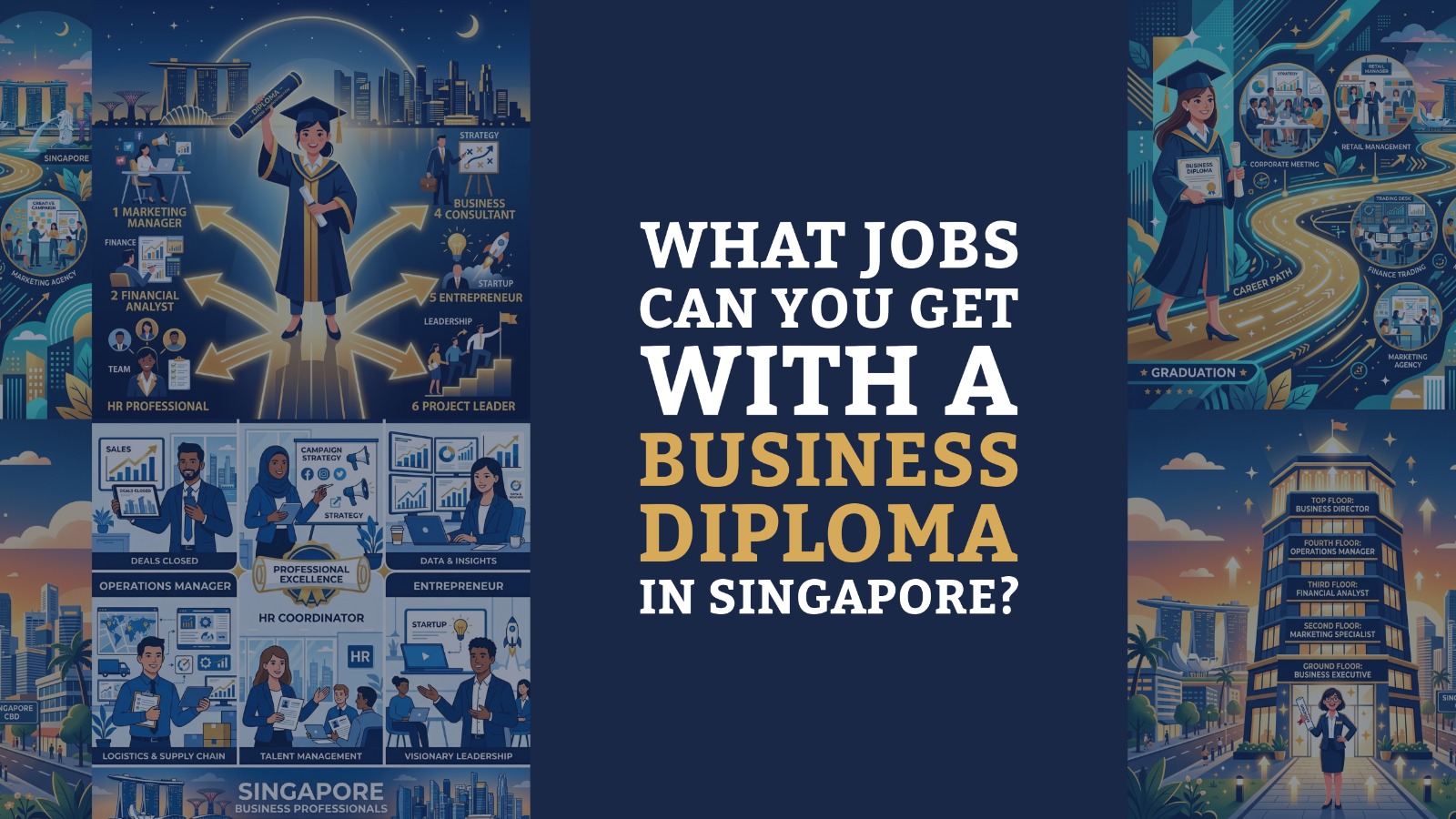
One misconception people still have is that diploma graduates have limited career opportunities. That really is not true anymore. Business diploma graduates may pursue roles such as:
- Administrative executive
- Customer service officer
- Marketing assistant
- Operations coordinator
- Sales executive
- Business support officer
- Office administrator
- Team coordinator
- Retail supervisor
Over time, practical experience matters enormously too. Employers may consider factors such as the following:
- Communication skills
- Reliability
- Problem-solving ability
- Professional attitude
- Adaptability
Not just certificates alone.
Is a Business Diploma Worth It?
Whether a business diploma is worthwhile depends on an individual’s education goals, career plans, and personal circumstances. Especially students who:
- Want practical career pathways
- Prefer shorter study durations
- Plan to enter the workforce earlier
- Want flexible future education options
- Hope to build management and communication skills
A diploma can also become a pathway toward advanced diplomas or degree programs later. Education doesn’t always need to follow one rigid timeline anymore. That idea is slowly changing globally.
Skills Students Develop During Business Diploma Programs
A good business diploma program usually develops much more than textbook knowledge. Students often improve:
- Workplace communication
- Leadership understanding
- Time management
- Team collaboration
- Problem-solving
- Presentation skills
- Organizational thinking
- Customer interaction abilities
These skills transfer across industries surprisingly well. Even outside traditional business careers.
Final Thoughts
Understanding business diploma admission requirements in Singapore early helps students prepare applications more confidently and avoid unnecessary confusion later on. Singapore continues to stand out as one of Asia’s strongest destinations for business education because it combines international exposure, multicultural learning environments, and industry-focused teaching approaches. For students exploring practical and career-oriented business education pathways, institutions like United Ceres College continue to support learners who want workplace-relevant knowledge and ongoing professional development. And honestly, choosing a business diploma is not just about getting a qualification. It’s about learning how organizations function, how people communicate professionally, how workplaces operate under pressure, and how businesses actually solve problems daily. Those skills remain useful almost everywhere. Even in careers that students haven’t imagined yet.
Frequently Asked Questions (FAQs)
1. What are the basic business diploma admission requirements in Singapore?
Most institutions require completion of secondary school or equivalent qualifications, such as O-Levels, IGCSE, or international high school certificates. International students may also need proof of English proficiency through IELTS or TOEFL, depending on the institution.
2. Can international students apply for business diploma programs in Singapore?
Yes. Singapore welcomes international students from many countries. Applicants usually submit academic transcripts, passport copies, application forms, and English proficiency documents during the admissions process.
3. Is IELTS mandatory for business diploma admission in Singapore?
Not always. Some institutions waive IELTS requirements if students previously studied in English-medium schools. Others may conduct internal English placement assessments instead.
4. How long does a business diploma program usually take?
Programme duration varies by institution. For example, United Ceres College’s Diploma in Business Management is completed over 8 months.
5. Why choose United Ceres College for business studies?
United Ceres College focuses on practical, industry-oriented education pathways that support students in developing professional communication skills, workplace understanding, and career-ready business knowledge in Singapore’s competitive business environment.