



Why Study Business Management in Singapore?
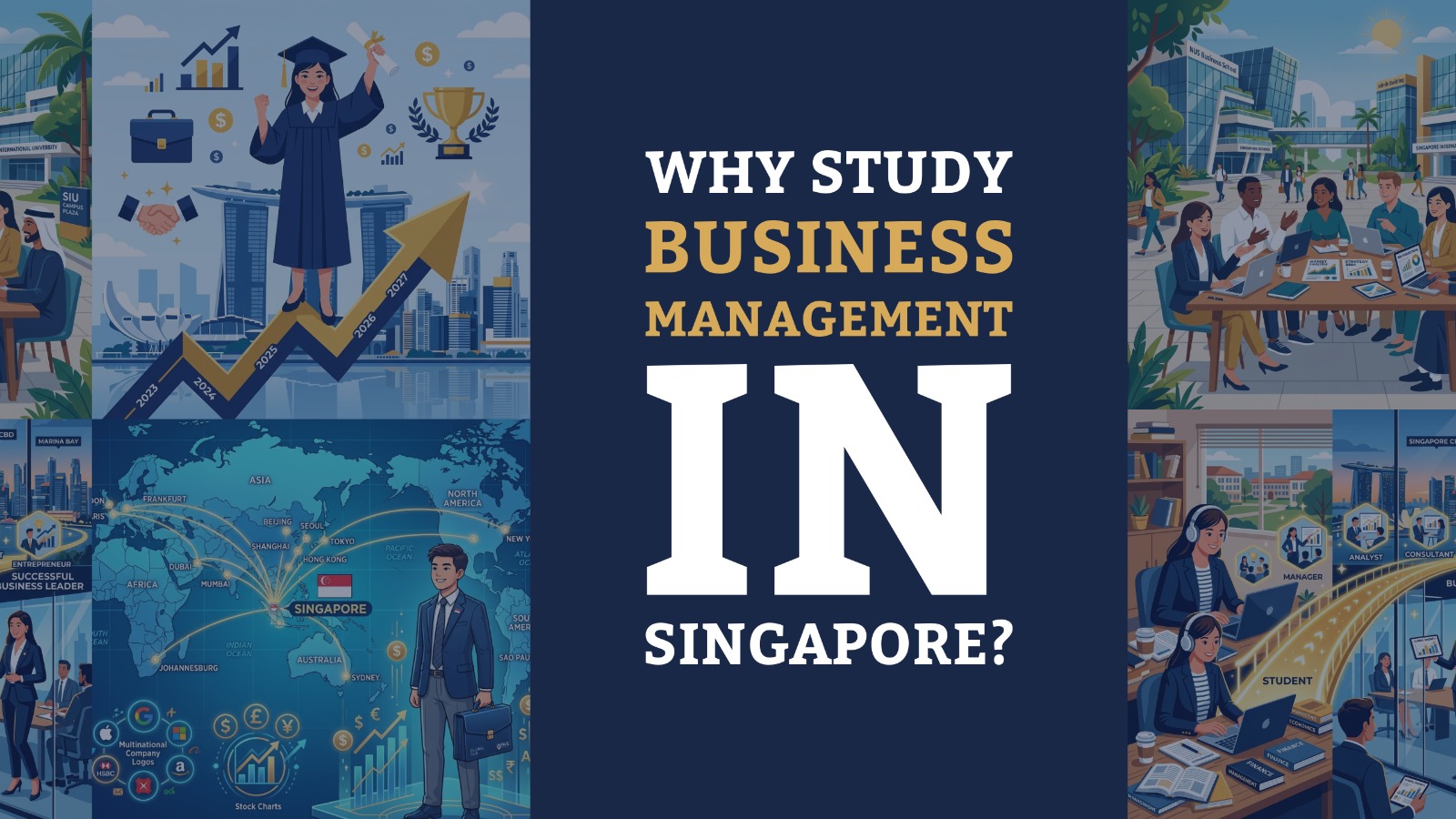
Table of Contents

TL;DR: Why Study Business Management in Singapore?
- Singapore is one of Asia’s leading business and education hubs with strong international connections.
- Business management courses in Singapore typically combine academic learning with practical learning activities such as projects, presentations, discussions, and case studies, depending on the institution and programme structure.
- Students benefit from multicultural environments, global networking opportunities, and industry-focused education.
- Singapore’s diverse economy includes industries such as finance, logistics, marketing, technology, hospitality, and international trade, providing a broad context for business education.
- Business management programs help students develop leadership, communication, organizational, and problem-solving skills.
- Institutions like United Ceres College offer business programmes designed to develop workplace-relevant knowledge and practical business skills.
- Singapore’s reputation for quality education attracts both local and international students seeking globally valuable qualifications.
Why Study Business Management in Singapore?
Choosing where to study business management is not always as straightforward as people think. Some students prioritize rankings. Others focus on affordability, career opportunities, or even lifestyle. And honestly, sometimes people simply want to study somewhere that feels motivating and full of possibilities. That’s one reason Singapore continues attracting students from around the world. Over the years, Singapore has quietly built a reputation as one of Asia’s strongest destinations for business education.
Actually, maybe not so quietly anymore. The country is now recognised internationally as an education, business destination, economic strength, safety, innovation, and international business exposure. When students search for reasons behind why to study business management in Singapore, they often discover something important fairly quickly: Depending on the institution and programme, students may study business concepts through lectures alongside practical learning activities such as discussions, presentations, projects, and case studies. The environment itself feels constantly connected to real business activity. And that changes the learning experience completely.
Singapore Is One of Asia’s Biggest Business Hubs
Singapore’s economy is heavily connected to global trade, finance, technology, logistics, and international business operations. Major international companies operate regional headquarters here, including businesses in:
- Banking
- Technology
- Shipping
- Retail
- Healthcare
- Hospitality
- Finance
- Digital services
Students studying business management in Singapore are surrounded by real commercial activity every day. Some learners may find that studying in Singapore provides additional context for understanding business concepts in practice. Sometimes education feels abstract in certain environments. Singapore rarely feels disconnected from industry reality.
International Exposure and Multicultural Learning
One of Singapore’s biggest advantages is its multicultural society. Students regularly interact with people from:
- China
- Malaysia
- Indonesia
- India
- Europe
- Middle Eastern countries
- African nations
- Western countries
This diversity naturally improves communication skills and cultural understanding. And honestly, modern business increasingly depends on exactly that. Companies today operate globally. Teams are international. Customers come from different backgrounds. Understanding how to communicate across cultures has become incredibly valuable professionally. Students often develop these skills naturally while studying in Singapore without even realizing it at first.
Strong Reputation for Quality Education
Singapore’s education system has built strong international credibility over the years. Business management institutions in Singapore often focus on:
- Practical learning
- Industry-relevant curriculum
- Professional communication
- Real-world business applications
- Leadership development
Many programs emphasize workplace-relevant knowledge rather than purely theoretical academic learning. That balance appeals to students who want qualifications connected to professional development. Because realistically speaking, most students are not studying business management simply for the certificate itself. They want practical opportunities afterward, too.
Business Management Is Versatile
Another reason students choose business management is flexibility. A business management qualification does not lock students into one single career path forever. Instead, it may support progression into roles across different industries depending on qualifications, experience, employer requirements and labour market conditions. Graduates may explore careers in:
- Marketing
- Human resources
- Administration
- Operations
- Customer service
- Project coordination
- Retail management
- Hospitality
- Entrepreneurship
- International business
And honestly, many students do not fully know their long-term career direction at the beginning anyway. Business management allows room for exploration.
Singapore’s Economy Creates Career Opportunities
Singapore’s economy is known for being highly organized, internationally connected, and innovation-driven. Business-related skills are relevant across industries such as:
- Finance
- Logistics
- Technology
- E-commerce
- Hospitality
- Corporate services
- Healthcare administration
- Supply chain management
Depending on the institution and programme, students may participate in practical learning activities, projects, industry talks, networking events, or other educational activities. Even observing workplace culture in Singapore can teach students a lot about professionalism and organization. Sometimes, small daily experiences shape career readiness more than textbooks alone.
Development of Leadership and Communication Skills
Business management is not only about spreadsheets, reports, or presentations. A large part of management involves people. Students typically develop:
- Leadership abilities
- Team coordination skills
- Communication confidence
- Negotiation techniques
- Organizational thinking
- Workplace professionalism
- Problem-solving approaches
And leadership itself is often misunderstood.
Good managers are not always the loudest people in the room. Sometimes the best leaders are calm, organized, emotionally intelligent, and reliable under pressure. Business education helps students understand those dynamics more clearly.
Practical Learning Environment
Depending on the institution and programme structure, students may participate in:
- Group projects
- Business case studies
- Workplace simulations
- Presentations
- Industry discussions
- Real-world problem-solving exercises
This practical approach helps students feel more prepared for professional environments after graduation. Honestly, learning communication and teamwork through actual practice is usually far more effective than reading theories about them endlessly. Business management is one of those subjects where experience-based learning matters enormously.
Why International Students Feel Comfortable in Singapore
Singapore remains one of the safest and most organized countries for international students. Some major advantages include:
- Efficient public transportation
- English-speaking environment
- Multicultural society
- Strong infrastructure
- International student communities
- Safe urban environment
For students moving abroad for the first time, these factors can significantly reduce stress. Adjusting to a new country already feels overwhelming sometimes. A stable environment helps students focus more on education and personal growth.
The Importance of Networking Opportunities
Business careers often grow through relationships, communication, and networking. Singapore’s international business environment may provide opportunities for students to:
- Meet professionals from different industries
- Build international connections
- Attend industry events
- Learn from multicultural teams
- Understand global workplace expectations
Networking sounds intimidating sometimes, but in reality, it often begins with simple conversations, teamwork, and classroom interactions. Business schools naturally create many of these opportunities.
Why Students Choose United Ceres College
Students exploring why they should study business management in Singapore often consider United Ceres College because of its industry-oriented and career-focused educational approach. Modern students increasingly want practical education connected to real workplace expectations rather than purely theoretical academic learning. United Ceres College’s Diploma in Business Management includes modules such as:
- English for International Business
- Leadership, Management and Entrepreneurship
- Fundamentals of Marketing
- Corporate Finance Strategy
- Human Resources, Organisational Culture and Collaboration
- Project Risk Management
- Innovation and eBusiness
These modules are designed to support learners in developing business knowledge, communication skills, leadership understanding, and organisational awareness.
Supportive educational environments can make a major difference in student confidence and overall learning experiences. Especially for international students adjusting to new systems and expectations.
Skills Students Gain from Business Management Studies
Business management programs help students develop skills useful across multiple industries and career paths.
These often include:
- Time management
- Team collaboration
- Business communication
- Workplace organization
- Critical thinking
- Professional presentation abilities
- Conflict resolution
- Decision-making
What’s interesting is that many of these skills remain valuable even outside traditional business careers. Life itself requires organization and communication constantly.
Is Studying Business Management in Singapore Worth It?
Whether studying business management in Singapore is worthwhile depends on an individual’s education goals, career aspirations, and personal circumstances. Especially students who:
- Want an internationally recognized education
- Prefer practical learning environments
- Hope to build versatile career skills
- Want exposure to global business culture
- Plan to work in international industries
Singapore offers a strong balance between education quality, business exposure, safety, and multicultural learning experiences. And realistically, employers may consider communication skills, professionalism, adaptability, qualifications, and work experience, depending on the role and organisation. Business management education helps develop all three.
Final Thoughts
Understanding why studying business management in Singapore becomes easier once students look beyond rankings or brochures and examine the environment itself. Singapore combines international business exposure, multicultural learning, practical education systems, and diverse professional environments within one globally connected economy. That combination creates a valuable experience for students preparing for modern business careers. Institutions like United Ceres College continue to support students through practical, business education pathways designed to help learners build confidence, communication abilities, and industry-relevant business knowledge. And honestly, business management is not only about managing companies. It’s about understanding people, solving problems, communicating clearly, adapting under pressure, and learning how organizations function in real life. These skills are commonly regarded as valuable across many industries.
Frequently Asked Questions (FAQs)
1. Why is Singapore a good place to study business management?
Singapore is one of Asia’s leading international business and education hubs. Students benefit from the established education sector, multicultural exposure, and real-world industry connections. The country’s globally connected economy provides valuable learning opportunities across finance, logistics, technology, hospitality, and international business sectors, helping students develop practical workplace understanding and career readiness.
2. What skills do students gain from business management programs in Singapore?
Business management students often develop leadership, communication, teamwork, organizational, and problem-solving skills. Programs also help students improve workplace professionalism, presentation confidence, and decision-making abilities. These transferable skills remain valuable across multiple industries, allowing graduates to explore careers in administration, marketing, operations, entrepreneurship, customer service, and project coordination successfully.
3. Is Singapore suitable for international students studying business management?
Yes, Singapore is considered highly suitable for international students because of its safe environment, multicultural society, efficient infrastructure, and English-speaking education system. Students from different countries study comfortably while gaining exposure to diverse cultures and international business environments. This experience helps strengthen communication abilities and global workplace adaptability significantly over time.
4. What career opportunities are available after studying business management in Singapore?
Business management qualifications may support progression into roles related to operations, administration, marketing, customer service, project coordination, hospitality, human resources, and international business, depending on an individual’s qualifications, experience, employer requirements, and labour market conditions. Singapore’s diverse economy creates opportunities across finance, technology, logistics, and retail industries. Many employers value business graduates who demonstrate communication skills, professionalism, adaptability, and practical understanding of workplace management environments and responsibilities.
5. Why do students choose United Ceres College for business management studies?
United Ceres College offers industry-focused and career-oriented business education pathways designed to support students in developing for real workplace environments. Students benefit from practical learning approaches, professional communication development, and supportive academic guidance. The institution helps learners build confidence, leadership understanding, and business knowledge aligned with modern industry expectations and career growth opportunities.