



Which Business Diploma Is Best in Singapore?

Table of Contents
TL;DR: Which Business Diploma Is Best in Singapore?
-
- Choosing the best business diploma in Singapore depends on your career goals, learning style, and the kind of business environment you want to enter. Some students prioritize international recognition. Others care more about practical skills, affordability, flexibility, or bilingual learning opportunities. Singapore offers strong options in business management, marketing, finance, entrepreneurship, and administration, making it one of Asia’s most respected education hubs.
-
- When comparing business diploma programmes, students may wish to consider factors such as communication skills development, leadership concepts, operational knowledge, practical learning approaches, programme structure, and learning environment. Institutions such as United Ceres College offer business-related programmes designed to support the development of workplace-relevant business knowledge and communication skills.
-
- Whether you are an international student, working professional, entrepreneur, or recent graduate, Singapore offers a business education environment that many learners consider when pursuing further study in business-related fields.
Which Business Diploma Is Best in Singapore?
This question sounds simple at first. But honestly? It rarely is. Some students search for the “best” diploma, expecting one perfect answer, like there’s a universally correct choice sitting somewhere in Singapore waiting for everyone equally. But business education does not really work that way. The right diploma for one person may feel completely wrong for another. A student who wants to work in finance may need a very different path from someone interested in entrepreneurship or marketing. Someone who struggles with heavily academic learning might perform much better in a practical, industry-oriented institution. And then there’s another reality people don’t always talk about enough: learning environment matters more than rankings alone. A supportive institution, practical training, and strong communication development often shape careers far more than flashy brochures. Singapore, fortunately, gives students many strong options.
Why Singapore Is One of Asia’s Top Business Education Destinations
There’s a reason students from across Asia, the Middle East, and even Europe choose Singapore for business studies. Actually, several reasons. Singapore combines:
- International business exposure
- Multicultural learning environments
- Established education sector
- Industry-focused education
- International business environment
- English-speaking and bilingual communication systems
In many countries, students study business theory without ever really seeing how businesses operate internationally. Singapore is different. The country itself functions as a global business hub. Multinational companies, startups, logistics firms, financial institutions, technology companies, and international trade organizations operate here daily. Companies like DBS Bank, Grab, and Shopee have helped shape Singapore’s modern business ecosystem. That means students are not learning business in isolation. They’re studying in an environment where business activity constantly surrounds them. And honestly, that changes perspective.
What Makes a Business Diploma “Good”?
A surprising number of students choose courses based only on popularity. That can backfire quickly. A strong business diploma should develop both technical knowledge and practical workplace skills. Depending on the organisation and role, employers may consider communication, teamwork, problem-solving, organisational skills, qualifications, and work experience. They want people who can:
- Communicate professionally
- Solve problems calmly
- Work in teams
- Handle workplace pressure
- Understand operations
- Manage time effectively
- Adapt to changing situations
Some business diploma programmes combine theory with practical learning activities such as case studies, projects, discussions, and presentations. That balance matters. Because business sounds exciting in theory until you actually deal with deadlines, difficult communication, scheduling issues, client expectations, and operational problems all at once. That’s real business management.
Popular Types of Business Diplomas in Singapore
Not all business diplomas focus on the same career outcomes. Here are some of the most common options students consider.
Business Management Diploma
This is probably the broadest and most flexible option. A business management diploma usually covers the following:
- Leadership
- Operations
- Workplace communication
- Human resource basics
- Organizational behavior
- Team coordination
- Business strategy
Students who are unsure about specializing immediately often choose management because it may support progression into a variety of business-related roles depending on an individual’s qualifications, experience, employer requirements, and labour market conditions. And realistically, almost every company needs organized people who can coordinate tasks and manage workflows properly.
Diploma in Marketing
Marketing has changed dramatically over the past decade. It’s no longer just advertisements and billboards. Modern marketing involves:
- Social media strategy
- Consumer behavior
- Digital campaigns
- Branding
- SEO
- Content marketing
- Customer engagement
Singapore’s digital economy has continued growth in digital business and has increased interest in marketing-related skills. This diploma suits students who enjoy communication, branding, psychology, and audience engagement.
Diploma in Finance and Accounting
Finance diplomas tend to attract students who prefer structure, analysis, and numbers. Courses may include:
- Financial reporting
- Budgeting
- Taxation basics
- Accounting systems
- Business mathematics
- Financial analysis
Some students absolutely love finance. Others realize halfway through their first accounting module that spreadsheets might not be their life calling after all. That self-discovery is normal, too.
Diploma in Entrepreneurship
Entrepreneurship programs focus on innovation and business development.
Students learn about:
- Startup planning
- Business models
- Risk management
- Market research
- Business pitching
- Strategic thinking
Singapore’s startup ecosystem makes entrepreneurship education particularly relevant.
Especially for students hoping to launch small businesses, online brands, or independent ventures in the future.
Which Business Diploma May Support Different Career Pathways?
This depends heavily on skills, communication ability, and adaptability, not just specialization alone. Still, certain fields consistently remain strong in Singapore:
Business Management
One of the safest and most versatile options. Depending on qualifications, work experience, employer requirements, and labour market conditions, graduates may explore roles related to:
- Administration
- Operations
- Customer service
- Team coordination
- Retail management
- Corporate support
It provides flexibility across industries.
Marketing
Digital businesses continue expanding rapidly. Marketing graduates may pursue roles involving:
- Social media management
- SEO content
- Branding
- Advertising
- Campaign coordination
- Content strategy
And yes, businesses today care enormously about online visibility. Probably more than ever before.
Finance
Finance-related knowledge is relevant across many organisations. Strong finance professionals are valuable in:
- Banking
- Insurance
- Corporate accounting
- Financial services
- Investment firms
Singapore’s financial sector remains one of Asia’s strongest.
Why Many Students Choose Practical Institutions Over Traditional Theory-Heavy Programs
Something interesting has shifted recently. Students are becoming more career-focused. Years ago, people often chose institutions based entirely on prestige. Today, many students ask more practical questions:
- Will this diploma help me get a job?
- Will I actually understand the lessons?
- Are the skills useful in workplaces?
- Does the institution support career development?
- Will the learning environment feel manageable?
Those are smart questions. Because education should help students grow professionally, not simply survive exams. That’s one reason institutions such as United Ceres College offer business programmes designed to support practical learning and business knowledge development. Many learners today prefer programs that feel connected to real workplace expectations rather than purely academic theory. And honestly, that preference makes sense.
Why Communication Skills Matter More Than Students Expect
A lot of students underestimate this. Business is heavily connected to communication. Even highly intelligent employees struggle professionally if they cannot communicate ideas clearly. Managers communicate constantly with:
- Teams
- Clients
- Customers
- Suppliers
- Senior leadership
- Stakeholders
That’s why strong diploma programs often emphasize the following:
- Presentation skills
- Workplace discussions
- Report writing
- Negotiation
- Team collaboration
In Singapore’s multicultural environment, communication becomes even more important. Especially for bilingual professionals.
The Growing Importance of Bilingual Business Education
Singapore’s connection with Chinese-speaking markets continues to influence education trends. Some learners may value opportunities to develop business communication skills in multilingual environments. That bilingual advantage can support opportunities in:
- International trade
- Logistics
- Customer service
- Administration
- Operations
- Regional business development
A bilingual business professional often adapts more comfortably across Asian business environments. And employers notice that flexibility.
Is Business Management Still Worth Studying in 2026?
Whether business management is worthwhile depends on an individual’s education goals, career interests, and learning preferences. But only if students actively develop practical skills alongside their qualifications. A diploma alone will not magically create success. That part matters. Still, business education remains valuable because organizations prefer people who can:
- Coordinate operations
- Communicate professionally
- Solve workplace problems
- Support teams
- Handle responsibilities efficiently
Technology changes constantly. Good communication and management skills remain relevant almost everywhere. That stability makes business education attractive.
What Students Should Look for Before Choosing a Diploma
Students sometimes rush this decision. That’s understandable, but risky. Before enrolling, it helps to evaluate:
Industry Relevance
Does the course reflect modern business environments?
Or does it feel outdated?
Practical Learning
Are students learning real workplace applications? Or only memorizing theories?
Communication Development
Strong communication training matters enormously in business careers.
Supportive Environment
A stressful learning environment can affect confidence and performance significantly. Students learn better when they feel supported.
Career Pathways
Good institutions should help students understand potential career progression after graduation.
Why Students Choose United Ceres College
United Ceres College continues to attract students interested in practical, career-oriented education in Singapore. United Ceres College’s Diploma in Business Management includes modules such as:
- English for International Business
- Leadership, Management and Entrepreneurship
- Fundamentals of Marketing
- Human Resources, Organisational Culture and Collaboration
- Corporate Finance Strategy
- Project Risk Management
- Innovation and eBusiness
The programme is designed to support learners in developing business knowledge, communication skills, leadership understanding, and organisational awareness through the published curriculum.
Business education feels more effective when students can actually connect lessons with real-world situations. That practical connection helps build confidence. And honestly, confidence changes everything in professional environments.
Career Opportunities After Completing a Business Diploma
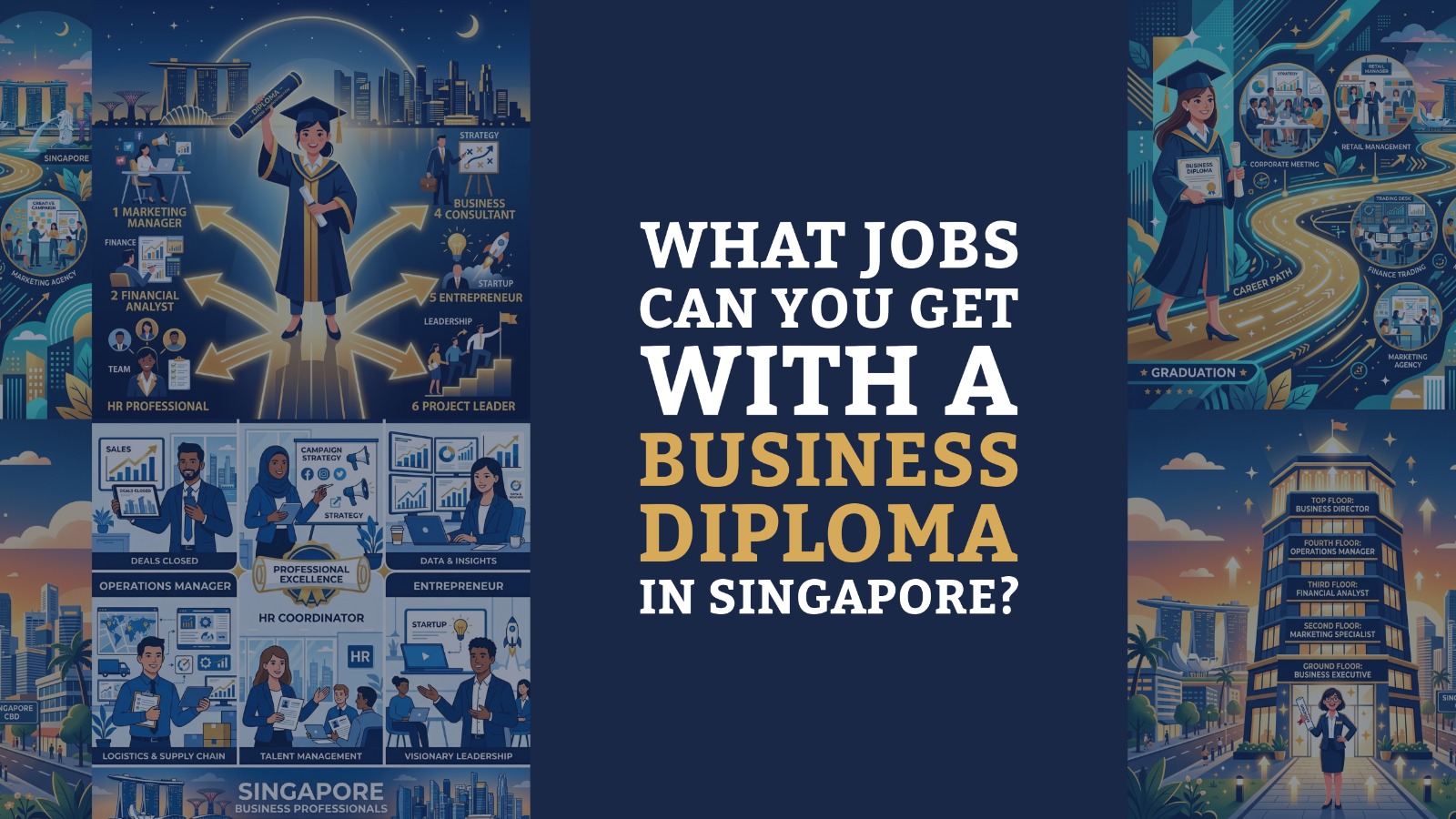
A business diploma can support entry into multiple industries. Graduates commonly pursue roles such as:
- Administrative Executive
- Operations Assistant
- Business Support Officer
- Team Coordinator
- Customer Service Supervisor
- Office Administrator
- Project Assistant
- Junior Manager
Career progression depends on factors including qualifications, work experience, individual performance, employer requirements, and labour market conditions. Because people who stay calm under pressure and solve problems efficiently can make their skills stand out.
Common Misconceptions About Business Diplomas
“Business diplomas are too general.”
Sometimes broad knowledge is actually an advantage. Many industries value adaptable employees.
“Only extroverts succeed in management.”
Completely untrue. Some excellent managers are naturally quiet, observant, and highly organized. Leadership is not about being loud.
“Business courses are easy.”
Not really. Good business programs involve teamwork, communication challenges, presentations, deadlines, and problem-solving. That combination can be demanding in very realistic ways.
So… Which Business Diploma Is Actually the Best?
If we’re being realistic, the “best” diploma depends on three things:
- Your career goals
- Your learning style
- The quality of the institution
For students seeking flexibility, practical workplace skills, and broad career opportunities, a business management diploma is commonly chosen by learners seeking broad business knowledge across multiple functional areas. It may support progression into a range of business-related roles. But the institution matters too. A supportive learning environment may contribute positively to the overall learning experience.
That’s why many students exploring business education pathways consider institutions like United Ceres College when researching practical business diploma programs in Singapore. Because at the end of the day, education should not only help students pass exams. It should help them function confidently in the real world. And honestly, that’s probably the part that matters most.
Frequently Asked Questions (FAQs)
1. Which business diploma is most in demand in Singapore?
Business Management, Marketing, and Finance diplomas are commonly offered areas of business study in Singapore because businesses consistently need professionals with communication, operational, and organizational skills. Marketing is growing rapidly due to digital business expansion, while management remains flexible across industries like retail, logistics, administration, and corporate services.
2. Is Singapore good for business studies?
Yes. Singapore is considered one of Asia’s leading education and business hubs. Students benefit from international exposure, multicultural learning environments, established education sectors, and business programmes that connect education with real workplace demands and professional environments.
3. What careers can I pursue after a business diploma?
Depending on qualifications, work experience, employer requirements, and labour market conditions, graduates may pursue roles in administration, operations, marketing, customer service, project coordination, and team supervision. Common positions include administrative executive, operations assistant, office coordinator, junior manager, and business support officer. Career progression often improves with experience and communication skills.
4. Why do students choose United Ceres College?
United Ceres College offers business-related programmes designed to support learners in developing communication skills, business knowledge, and organisational understanding through its published curriculum. Students today often prefer institutions that emphasize workplace readiness, communication development, professional confidence, and industry-relevant business education pathways in Singapore.
5. Is a business management diploma worth it in 2026?
For many students, yes. Business management remains relevant because organizations always need professionals who can organize workflows, communicate effectively, solve operational problems, and support teams efficiently. The qualification may complement practical experience and ongoing professional development when combined with practical experience and adaptability.