



AEIS Results Released: What Happens Next?
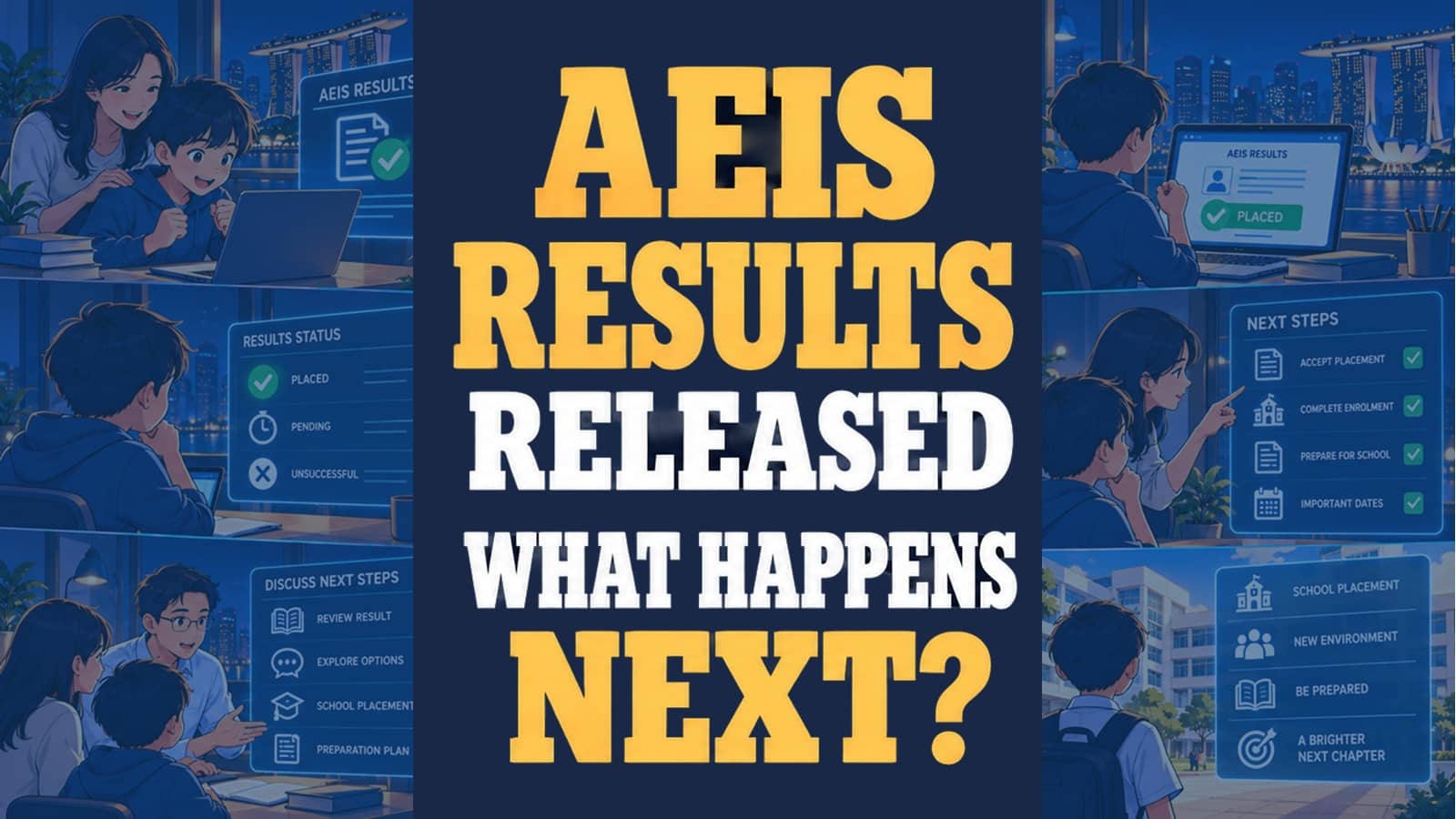
Table of Contents

TL;DR: AEIS Results Released: What Happens Next?
- AEIS results are an important milestone, but receiving the result is not necessarily the final step. Families should carefully check the outcome and follow the instructions provided for the next stage of the admission process.
- Students who receive a school offer need to pay attention to registration, deadlines, documents, and school-specific instructions. Missing a required step or deadline can create unnecessary complications.
- Unsuccessful students should not assume their education plans are over. Depending on eligibility and the applicable admissions cycle, families can explore other pathways, including the relevant S-AEIS or alternative education options.
- Families considering another eligible AEIS or S-AEIS attempt can review structured preparation options, including United Ceres College’s AEIS Primary preparatory course where the child’s age, intended level and eligibility are appropriate.
Waiting for AEIS results can be one of the most stressful parts of the admissions process for international students and their parents. After weeks or months of preparation, receiving the result can bring relief, excitement, or disappointment. But what happens after the results are released? For successful candidates, the next stage involves more than simply celebrating. Families need to understand the instructions provided, complete any required steps, prepare the necessary documents, and get ready for the transition into a Singapore school.
For students who are not successful, the result does not necessarily mean they have no other options. Depending on their circumstances and the applicable admissions exercise, families may need to consider another route, such as the Supplementary Admissions Exercise for International Students (S-AEIS) or other suitable education pathways. The important thing is to avoid making decisions based on assumptions. Check the official result and current MOE instructions for your child’s admission outcome and school-posting arrangements. Where SEAB administers parts of the application or test process, follow the relevant instructions provided through the official candidate system.
What Is the AEIS?
The Admissions Exercise for International Students (AEIS) is an admission exercise for international students seeking admission to Primary 2–5 and Secondary 1–3 in Singapore’s mainstream schools, subject to the applicable eligibility requirements and available places.
AEIS assessment arrangements differ by level. For Primary applicants, English proficiency is demonstrated through the applicable Cambridge English Qualification requirement, while eligible applicants sit the AEIS Mathematics test. Secondary applicants take English Language and Mathematics tests. Admission is not guaranteed and depends on the applicable requirements and available school places.
AEIS Results Released: What Should Parents Do First?
When the result becomes available, resist the temptation to immediately start planning everything. Instead, work through the result carefully.
Step 1: Check the Official Result
Check the outcome through the official portal or system identified in MOE’s instructions for that admission exercise. MOE’s current instructions state that results are not viewed through the SEAB Candidates Portal. Parents should avoid relying on social-media posts, unofficial websites, tuition providers, or messages from other parents as confirmation of the result. The official result is the information that should guide your next steps. Also check:
- Student’s name and details
- Admission outcome
- School information, if provided
- Instructions for the next stage
- Deadlines
- Required documents
- Any conditions attached to the outcome
Keep a copy of the result and related correspondence for your records.
What If Your Child Is Successful?
A successful AEIS result is excellent news, but families should remember that the process does not end the moment the result is released. The next steps depend on the instructions issued for the relevant AEIS exercise. Generally, parents should be prepared to deal with matters such as:
- School placement information
- Registration requirements
- Documentation
- Immigration or student-pass matters, where applicable
- School communication
- Start-date information
- Fees and other administrative arrangements
- Preparation for the transition to Singapore’s education system
The exact process can change, so parents should follow the current official instructions rather than relying on an older AEIS guide.
Understanding School Placement
One of the biggest questions parents may have after receiving a successful result is: “Which school will my child attend?” It is important to understand that AEIS is not necessarily a process where parents simply select any school they want and receive admission there. Families should not assume that a successful outcome allows them to choose any preferred mainstream school.
Placement is determined through MOE’s applicable posting arrangements, taking available vacancies into account and, where applicable, the declared residential area. This is why families should carefully read the official information attached to the result. If a school has been assigned or offered, check the instructions on what the family must do next. If you are unsure about any part of the placement information, contact the relevant official authority or school rather than making assumptions.
Documents to Prepare After AEIS Results
Once your child receives a successful outcome, it is important to organize the required documents and next steps carefully. The exact documents required can vary, but families should be prepared to provide relevant records. The school or relevant authority will specify the required documents. These may include identification, immigration, and prior education records, depending on the student’s circumstances.
What About the Student Pass?
International students need to consider their immigration status separately from school admission. If a child receives a successful AEIS outcome it does not mean parents should automatically assume that every immigration requirement has already been completed. Foreign students offered a place in a Government, government-aided, or independent school generally need a Student’s Pass unless they already hold an immigration status that exempts them from this requirement, such as a valid Dependant’s Pass, long-term visit pass, or Immigration Exemption Order. Families should therefore check the relevant official guidance and complete any required immigration procedures within the specified timeline. This is particularly important for families currently living outside Singapore.
When Should Your Child Start Preparing for School?
Do not wait until the first day of school to begin the transition. Once the admission arrangements are confirmed, families can start helping the student prepare academically and emotionally.
Academic preparation
Your child may need to become familiar with:
- Singapore’s curriculum
- English-medium instruction
- Mathematics terminology
- Classroom expectations
- Homework routines
- Assessment methods
A student may have performed well in the AEIS assessment but still need time to adjust to the classroom environment.
Example
Imagine a student moving from another country where Mathematics is taught using slightly different terminology. The student may understand the underlying mathematical concept but struggle with the wording used in Singapore classrooms. Practising relevant vocabulary can help reduce this adjustment challenge.
Preparing for a New School Environment
Moving into a new education system involves more than academic preparation. Your child may need to adjust to:
- New teachers
- New classmates
- Different school rules
- New routines
- Different teaching styles
- A new cultural environment
- Greater independence
Parents can help by discussing the transition before school begins. Ask questions such as:
- What are you most excited about?
- What are you worried about?
- What do you want to know about your new school?
- Which part of the transition feels difficult?
These conversations can help children express concerns before they become overwhelming.
What If the AEIS Result Is Unsuccessful?
This is often the hardest result for families to receive. However, an unsuccessful AEIS outcome does not mean that your child’s educational journey has ended. The next step is to review the student’s preparation, check which admission options remain available, and decide what should change before another eligible application or assessment. Depending on eligibility and timing, families may consider the S-AEIS or other education pathways. The S-AEIS is a supplementary admission exercise for international students. The available levels and requirements are subject to the current year’s rules. Parents should therefore check the latest official MOE/SEAB information before making plans.
Should Your Child Apply for Another AEIS or S-AEIS Exercise?
There is no universal answer. Before deciding on another attempt, ask:
- Which academic areas appear to need further development based on the student’s preparation and practice performance?
- Is the student eligible for the next relevant exercise?
- Is there enough time for meaningful preparation?
- Would another education pathway be more appropriate?
- How is the student coping emotionally?
A second attempt should not simply mean repeating the same preparation. If practice performance suggests that language comprehension is affecting a Primary applicant’s ability to interpret Mathematics questions, or if a Secondary applicant needs further English Language development, the next preparation plan should address those specific needs.
What Is S-AEIS?
Students who are unsuccessful in AEIS may be able to apply for a subsequent AEIS or S-AEIS exercise if they meet the applicable age and eligibility requirements. However, it is important to check the current S-AEIS eligibility requirements, available levels, registration dates, and assessment arrangements before planning around it. The availability of an S-AEIS pathway does not mean every student who was unsuccessful in AEIS will automatically qualify. Eligibility matters.
AEIS vs S-AEIS: A Simple Comparison
| Feature | AEIS | S-AEIS |
| Purpose | Main admission exercise for eligible international students | Supplementary admission exercise |
| Intended students | Eligible international students | Eligible international students who meet the applicable requirements |
| Timing | Held according to the annual AEIS schedule | Held later according to the annual S-AEIS schedule |
| Assessment | Depends on intended level and current requirements | Depends on applicable level and current requirements |
| Admission | Subject to applicable requirements and vacancies | Subject to applicable requirements and vacancies |
S-AEIS is a supplementary admissions exercise for eligible international students seeking admission to Primary 2 to 4 or Secondary 1 to 2 in the same academic year. It is therefore not available for every level covered by AEIS. Always check the latest official information because dates, eligibility rules, tested levels, and procedures can change between admission cycles.
Preparation depends on the applicant’s level and current assessment requirements. Primary applicants should distinguish between the CEQ English requirement and the AEIS/S-AEIS Mathematics test, while Secondary applicants prepare for English Language and Mathematics.
What If Your Child Does Not Qualify for S-AEIS?
Parents should not immediately assume there are no alternatives. Depending on the child’s age, academic background, immigration situation, and educational goals, families may explore other options. These could include:
- International schools
- Private education institutions
- Returning to the existing education system
- Alternative schooling arrangements
- Applying through another eligible admission route
- Preparing for a future education opportunity
The appropriate choice depends heavily on the individual circumstances of the student. This is why parents should consider the child’s long-term education plan, not only the immediate AEIS result.
Common Mistakes Parents Make After AEIS Results
Mistake 1: Assuming a successful result means everything is complete
Admission-related administrative steps may still need to be completed. Always read the official instructions carefully.
Mistake 2: Missing deadlines
Parents may become focused on travel, accommodation, or school shopping and forget administrative deadlines. Create a checklist as soon as the result is released.
Mistake 3: Relying on old AEIS information
AEIS procedures can change. A blog post from several years ago may contain outdated dates, requirements, or processes. Use current official sources for important decisions.
Mistake 4: Treating an unsuccessful result as the end
One result does not define a student’s entire educational future. Explore the options for which your child is actually eligible.
Mistake 5: Focusing only on academics
A child moving to Singapore may need support with social adjustment, routines, communication, and independence as well.
How Parents Can Create an AEIS Results Checklist
A simple checklist can make the post-results period less stressful.
If the result is successful:
- Save the official result
- Read all instructions
- Note important deadlines
- Prepare requested documents
- Complete required registration steps
- Check immigration requirements
- Review school information
- Plan accommodation and transport
- Prepare the child academically
- Discuss the transition with the child
If the result is unsuccessful:
- Save the result
- Review available options
- Check S-AEIS eligibility
- Check relevant dates
- Identify academic weaknesses
- Review alternative education pathways
- Create a realistic preparation plan
- Discuss options calmly with the child
How to Prepare If Your Child Will Start School in Singapore
Once admission is confirmed, preparation should become practical.
Review English skills
English may be important not only for examinations but also for classroom communication, reading instructions, writing assignments, and interacting with teachers and classmates. Encourage your child to:
- Read regularly
- Write short responses
- Learn unfamiliar vocabulary
- Practise understanding instructions
- Explain ideas in English
Strengthen Mathematics
Rather than memorising answers, encourage your child to understand the reasoning behind problems. Practise:
- Multi-step questions
- Word problems
- Mental calculation
- Problem-solving
- Mathematical vocabulary
Build independent study habits
Your child may need to manage homework and revision more independently. Start practising this before school begins. For example, create a simple weekly routine with:
- Homework time
- Reading
- Revision
- Breaks
- Exercise
- Leisure
Should You Continue AEIS Tuition After Results?
It depends on the outcome. If the child has been successful and is preparing to enter school, tuition may not be necessary immediately unless there is a specific academic need. However, targeted support can sometimes help students bridge gaps between their previous curriculum and the Singapore curriculum.
If the result was unsuccessful and the family plans to pursue another relevant assessment, additional preparation may be useful. The key is to identify what the student actually needs. More tuition hours are not automatically better.
What Should Parents Do About School Fees and Costs?
The cost of moving to Singapore can include more than tuition or school-related fees. Families should also review the school’s applicable fees and likely relocation or living costs using current official information before making arrangements.
The actual cost varies depending on the student’s circumstances and school arrangement. Parents should create a realistic budget before making relocation decisions.
Helping Your Child Emotionally After the Results
AEIS preparation can be stressful. A successful result can create excitement but also anxiety about starting somewhere new. An unsuccessful result can lead to disappointment. Parents should avoid treating the result as a judgement of the child’s overall ability. Instead, focus on what happens next. For a successful student: “You’ve achieved an important step. Now let’s prepare for your new school.” For an unsuccessful student: “Let’s understand what happened and look at the options available to you.” This approach keeps the conversation focused on learning and planning rather than fear..
Understanding longer-term interests can help families make better decisions about the education pathway today. At United Ceres College, students exploring further education can consider programmes that support practical learning and the development of skills relevant to modern academic and professional environments. Families should review individual program structures, entry requirements, and learning outcomes to determine whether a particular pathway fits their student’s goals.
Common Misconceptions About AEIS Results
Misconception 1: A successful result guarantees everything is complete
A successful outcome is an important milestone, but families still need to follow the applicable admission and administrative instructions.
Misconception 2: An unsuccessful AEIS result means the child cannot study in Singapore
Not necessarily. Other options may exist depending on eligibility, timing, school type, and the child’s circumstances.
Misconception 3: Every unsuccessful student can automatically take S-AEIS
No. S-AEIS has its own eligibility requirements and applicable admission levels. Parents should check the current official rules.
Misconception 4: Tuition guarantees a successful AEIS result
No preparation provider can guarantee admission. Tutoring can support academic preparation, but individual performance and admission requirements still matter.
Misconception 5: The AEIS result determines the child’s future
An admission assessment is only one part of a student’s education journey. A child can continue developing academically and exploring different pathways even if the immediate outcome is not what the family expected.
Final Thoughts
AEIS results are an important milestone, but they are not the end of the journey. If your child receives a successful result, focus on completing the required administrative steps, understanding the school placement information, preparing documents, and helping your child adjust to Singapore’s education environment. If the result is unsuccessful, take time to understand the available options rather than making an immediate decision based on disappointment. Depending on eligibility, the S-AEIS or another education pathway may be worth considering.
Most importantly, use current official information when making decisions. AEIS schedules, eligibility requirements, assessment arrangements, and procedures can change, so older guides may not reflect the latest process. For families planning a longer-term education journey in Singapore, it can also be useful to look beyond the immediate admission result. Consider your child’s academic interests, learning style, future goals, and the skills they will need as they progress through their education. The AEIS result is one step. What happens next should be a thoughtful plan for the student’s wider learning journey.
Frequently Asked Questions
1. What should I do immediately after AEIS results are released?
Check the official result carefully, save a copy, read all instructions, and note any deadlines. If the result is successful, follow the required admission and registration steps.
2. What happens if my child receives a successful AEIS outcome?
A successful outcome generally means the student has received a school posting through the AEIS process, subject to the applicable admission and registration requirements. Families should follow the instructions provided with the official outcome.
3. What if my child receives an unsuccessful AEIS outcome?
Review the result and check which options are currently available. Depending on eligibility and timing, S-AEIS or alternative education pathways may be worth exploring.
4. Can my child take S-AEIS after an unsuccessful AEIS result?
Potentially, but eligibility depends on the current S-AEIS requirements and the student’s circumstances. Check the latest official MOE and SEAB information before registering.
5. Should my child continue studying after receiving a successful AEIS result?
Continued preparation can be useful, but the focus may shift from the admission assessment to adjusting to the student’s new school level, curriculum and routines. Instead of preparing only for the admission assessment, students can work on English, Mathematics, independent learning, and adapting to Singapore’s school environment.
6. Does passing AEIS guarantee a specific school?
Families should follow the official placement information for their admission exercise. School placement is subject to the applicable rules, vacancies, and other requirements, so parents should not assume that passing the assessment guarantees admission to a particular preferred school.