



Why Applied AI Education in Singapore Remains a Hub in Southeast Asia
Table of Contents
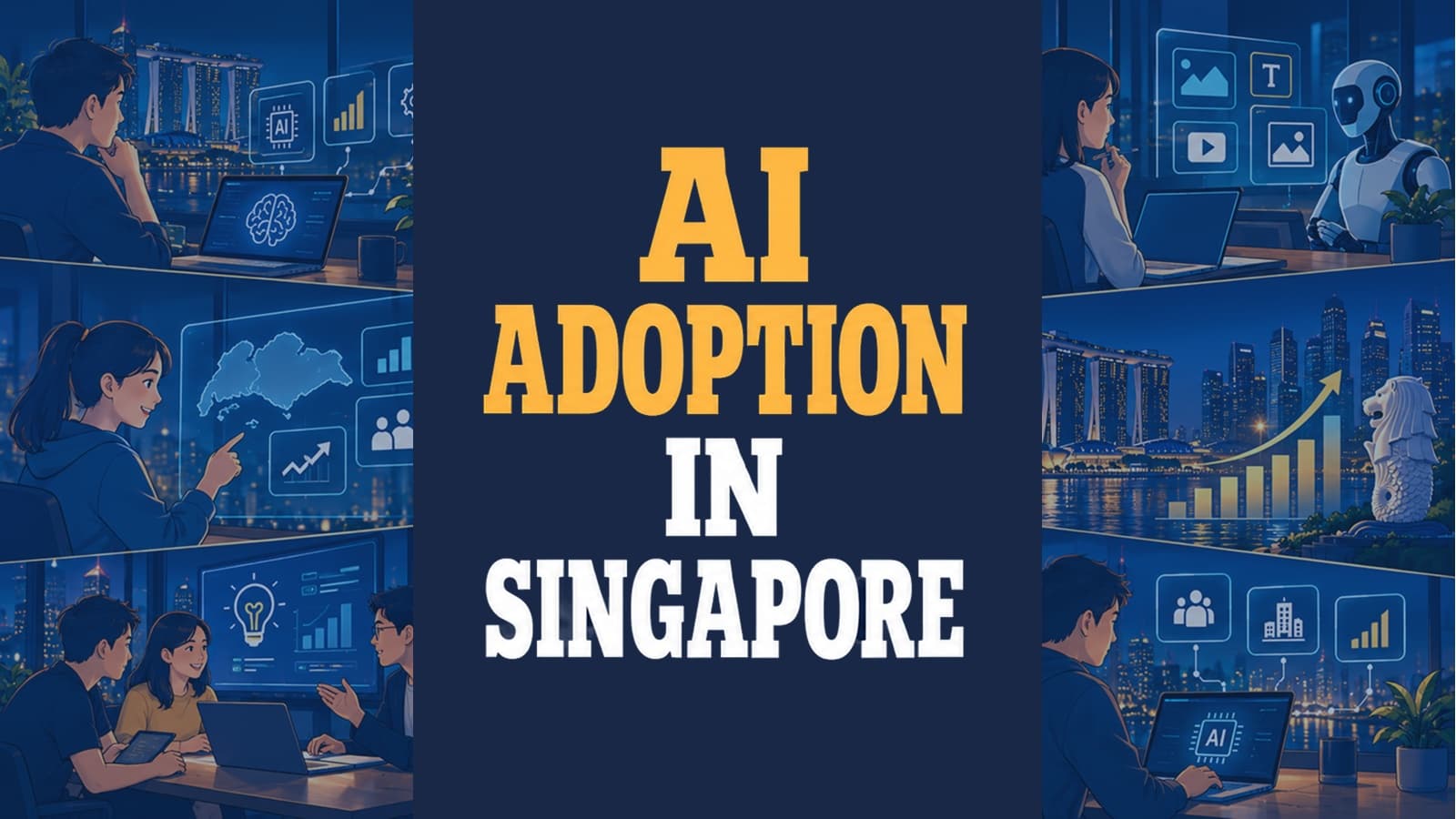
TL;DR: Why Applied AI Education in Singapore Remains a Hub in Southeast Asia
- Singapore has built a strong environment for applied AI education through its technology ecosystem, digital infrastructure, research capabilities, and close links between education and industry.
- Applied AI focuses on using AI to solve practical problems, rather than studying the technology only in theory. Students may explore areas such as data analysis, automation, machine learning, generative AI, and business applications.
- Singapore’s international environment can benefit students preparing for technology-related careers. Exposure to businesses, digital industries, and diverse professional environments may help learners understand how AI is applied beyond the classroom.
- United Ceres College offers Diploma and Advanced Diploma programs in Applied Artificial Intelligence, allowing learners to explore AI through curriculum areas that connect technical concepts with practical applications. Students should review the current curriculum, entry requirements, and delivery format to choose the program that best fits their goals.
Singapore has developed a substantial AI ecosystem supported by national AI initiatives, digital infrastructure, research activity, workforce development, and a strong regional business environment. These factors help make it an attractive location for learners interested in applied AI. Students interested in artificial intelligence have more education options than ever before. Universities, colleges, training providers, and online platforms across Asia now offer programs covering AI, machine learning, data science, and related technologies. So why does Singapore continue to attract students interested in applied AI education? One reason is that Singapore (Applied AI Education in Singapore) has developed a strong technology and business ecosystem alongside its education sector.
The country has invested in AI research, digital infrastructure, workforce development, and national AI initiatives. It is also home to multinational companies, technology businesses, financial institutions, research organizations, and startups that use digital technologies in practical settings. For students, studying in such an environment can provide useful context for understanding how AI is being discussed and applied across different sectors.
The keyword is applied. Applied AI education focuses on understanding how artificial intelligence can be used in real situations, from analyzing business data and automating processes to developing intelligent applications and supporting decision-making. For students looking to build practical skills in this growing field, pursuing a Diploma in Artificial Intelligence can provide a structured pathway into AI concepts, tools, and applications.
What Is Applied AI Education in Singapore?
Applied AI education teaches students how artificial intelligence can be used to solve practical problems. A theoretical lesson might focus on how a machine-learning algorithm works. An applied lesson could ask: “How can a business use this model to predict customer demand?” Both are valuable, but they approach AI from different perspectives. Applied AI may cover areas such as:
- Machine learning
- Data analysis
- Generative AI
- Natural language processing
- Computer vision
- Automation
- AI product development
- Predictive analytics
- Responsible AI
- AI applications in business
The exact subjects depend on the program. The subjects discussed throughout this article illustrate the broader field of applied AI and should not be interpreted as the curriculum of a specific UCC programme. Prospective students should refer to the official programme page for the current modules and learning outcomes.
A simple example
Suppose a retailer has thousands of customer transactions. Learning about machine learning might involve understanding how a predictive model works. Applied AI education might take the next step: Can we use customer data to identify purchasing patterns and improve inventory planning? The focus moves from technology alone to technology + problem + practical outcome.
Why Does Applied AI Matter?
AI is no longer limited to research laboratories. Businesses are using AI for tasks such as:
- Customer support
- Marketing
- Fraud detection
- Demand forecasting
- Software development
- Document processing
- Data analysis
- Product recommendations
- Supply-chain planning
- Content creation
This means students may benefit from understanding how AI fits into existing organisations. A person can know how a machine-learning model works and still struggle to decide whether that model is appropriate for a real business problem. Applied education attempts to bridge that gap.
Why Singapore Has Become Important for AI Education
Singapore has several characteristics that support AI learning.
1. Strong digital infrastructure
AI depends on computing resources, connectivity, data systems, and digital platforms. Singapore has invested heavily in digital infrastructure and technology capabilities. This creates a supportive environment for organizations developing and using AI. For students, the wider digital ecosystem matters because education does not happen in isolation. A student learning about AI can better understand its applications when the surrounding economy is also adopting digital technologies.
2. Government Support for AI Development
Singapore’s government has made AI a significant part of its national technology strategy. The country launched its first National AI Strategy in 2019 and updated it with National AI Strategy 2.0 in 2023. The strategy focuses on developing AI capabilities while supporting responsible and trusted AI use. Singapore has also introduced initiatives around AI research, talent development, compute infrastructure, governance, and adoption. This policy environment can influence education because businesses and institutions need people with relevant skills.
3. Strong Industry Presence
Singapore is home to companies across industries such as
- Financial services
- Technology
- Healthcare
- Logistics
- Manufacturing
- Telecommunications
- Professional services
- E-commerce
Many of these industries have potential applications for AI. Consider financial services. A bank might use AI for fraud detection, customer support, risk analysis, or document processing. A logistics company might use AI to improve delivery planning. A manufacturer might use AI to monitor equipment. This creates useful examples for students studying applied AI.
4. Singapore’s Position as a Regional Business Centre
Singapore has long been an important business and commercial centre in Southeast Asia. Its location provides connections to markets across the region, including:
- Malaysia
- Indonesia
- Thailand
- Vietnam
- Philippines
- Other ASEAN economies
For international students, this regional context can be valuable. AI adoption does not happen in exactly the same way in every country. A business operating across several Southeast Asian markets may need to consider different customer behaviors, regulations, languages, infrastructure, and levels of digital maturity. Students exposed to these differences can develop a broader understanding of AI applications.
Applied AI vs Traditional AI Education
The distinction can be useful when comparing programmes.
| More Applied Emphasis | More Theoretical Emphasis |
| Focuses on practical applications | Focuses heavily on concepts and theory |
| Uses real-world problems | May emphasise mathematical foundations |
| Connects AI with business or industry | May focus more deeply on algorithms |
| Often includes projects | May include more theoretical assignments |
| Emphasises implementation | Emphasises understanding underlying principles |
| Useful for practical problem-solving | Useful for research and advanced technical study |
This is not a question of one being better. A student interested in AI research may want a strong theoretical foundation. A working professional looking to introduce AI into a business may prefer more applied learning. The right choice depends on the student’s goals.
What Do Students Learn in Applied AI?
The exact curriculum varies, but applied AI programs may introduce students to several areas.
Machine Learning
Students may learn how computers identify patterns in data and use those patterns to make predictions or classifications. For example, a retailer could use machine learning to estimate future demand.
Generative AI
Generative AI systems can create text, images, audio, code, and other content. Students may explore how these systems work and how organisations can use them responsibly.
Data Analysis
AI depends heavily on data. Students may learn how to collect, clean, organize, analyse, and interpret data.
Automation
AI can be combined with automation to reduce repetitive work. For example, an organisation could automate document classification or customer inquiry routing.
Natural Language Processing
NLP enables computers to work with human language. Applications include:
- Chatbots
- Translation
- Sentiment analysis
- Text summarisation
- Search
- Document analysis
Applied AI Example: Financial Services
Financial services provide a useful example of applied AI. Imagine a bank receiving thousands of transactions every minute. Manually checking every transaction for suspicious activity would be difficult. AI can help identify unusual patterns that may require further investigation. However, the AI system does not automatically solve the entire problem. The organization also needs:
- Good-quality data
- Appropriate models
- Security controls
- Human oversight
- Clear governance
- Monitoring
This illustrates what makes applied AI different from simply understanding an algorithm. Students need to think about the whole system.
AI in Healthcare
Healthcare is another area where AI has potential applications. AI can support activities such as:
- Medical research
- Administrative processes
- Image analysis
- Patient communication
- Data analysis
- Resource planning
However, healthcare is also a good example of why responsible AI matters. A system used in a high-stakes environment may require professional review, strong privacy protections, careful validation, and appropriate governance. Students learning applied AI should therefore understand not only what AI can do, but also when AI should not be used without human oversight.
AI in Logistics and Supply Chains
Singapore’s role in global trade and logistics also creates interesting opportunities for applied AI. Businesses can use AI for areas such as:
- Demand forecasting
- Route optimisation
- Inventory management
- Warehouse operations
- Predictive maintenance
Example: Imagine a company managing thousands of products across several warehouses. AI could analyze historical sales data and other relevant information to estimate which products may be needed in different locations. This could support inventory decisions. Again, the value comes from connecting AI with a real operational problem.
Why Industry Awareness Matters for Students
Tool-specific skills can become outdated quickly as AI technologies evolve. Broader capabilities such as problem-solving, data literacy, critical thinking and understanding AI limitations may be more transferable across changing tools and platforms. A particular AI application may become less important as technology changes. Underlying skills are more transferable. These can include:
- Problem-solving
- Data literacy
- Critical thinking
- Understanding AI limitations
- Communication
- Digital skills
- Responsible technology use
For example, today’s popular generative AI tool may change, but knowing how to evaluate an AI system’s output can remain useful. This is one reason applied AI education should ideally focus on principles and practical problem-solving rather than only teaching a specific software product.
Singapore’s Focus on AI Skills Development
AI adoption requires people who understand how to use the technology. This includes highly technical professionals such as
- AI engineers
- Data scientists
- Machine-learning specialists
But businesses also need people who understand AI from other perspectives.
For example:
- Product managers
- Business analysts
- Marketing professionals
- Operations managers
- Designers
- HR professionals
- Finance professionals
Not every employee needs to build an AI model. Some need to understand how AI can be applied responsibly to their area of work.
Who Should Consider Applied AI Education?
Applied AI education can be relevant to a wide range of learners.
Students interested in technology
They may want to develop stronger foundations in AI, data, programming, and digital systems.
Business students
They may want to understand how AI can support business decisions, customer experience, operations, and productivity.
Working professionals
Professionals may explore AI education to understand how their industries are changing and where automation or AI assistance may be appropriate.
Career changers
Someone with experience in another field may use AI learning to add digital skills to their existing professional background. For example, a marketing professional who learns data analysis and generative AI may be able to contribute to AI-assisted marketing workflows. Individual career outcomes still depend on qualifications, experience, skills, and employer requirements.
Do You Need Programming Experience?
This depends on the programme and your career goals. If you want to become an AI engineer or machine-learning developer, programming and mathematics are likely to be important. If you are interested in applying AI to business, you may not need the same level of coding knowledge. You may instead focus on:
- AI concepts
- Data interpretation
- AI tools
- Business applications
- Workflow design
- Critical thinking
- Responsible AI
Before enrolling, check the program’s entry requirements and curriculum. A beginner-friendly program may introduce technical concepts gradually, while advanced programmes may expect prior knowledge.
Skills That Can Help You Succeed in Applied AI
Analytical thinking
AI projects often involve identifying patterns and understanding problems.
Problem-solving
The ability to define a problem clearly is important before choosing a technology.
Data literacy
Students should understand how data affects AI outputs.
Communication
AI professionals often need to explain technical ideas to non-technical colleagues.
Curiosity
AI changes quickly, so learners need a willingness to keep learning.
Responsible decision-making
Understanding privacy, bias, security, transparency, and human oversight is increasingly important.
Common Misconceptions About Applied AI Education
Misconception 1: Applied AI is only for programmers
Not necessarily. AI is used across business, healthcare, marketing, finance, education, manufacturing, and other fields. The technical depth required depends on the role.
Misconception 2: Studying AI guarantees a high-paying job
No program can guarantee a particular salary or employment outcome. Career opportunities depend on qualifications, experience, skills, industry demand, location, and employer requirements.
Misconception 3: You need to be a mathematics expert
Mathematics can be important for advanced AI development and research. However, introductory and applied AI learning can include students with different levels of technical experience, depending on program requirements.
Misconception 4: Applied AI means learning how to use ChatGPT
Generative AI tools are one part of the broader AI field. Applied AI can involve machine learning, predictive analytics, automation, computer vision, NLP, data analysis, and other technologies.
Misconception 5: Singapore is the only place to study AI in Southeast Asia
No. Many countries across Southeast Asia are developing AI education and industry capabilities. Singapore’s appeal comes from its particular combination of business, technology, education, infrastructure, and regional connections.
What Should Students Look for in an Applied AI Programme?
Choosing an AI programme requires more than looking at the word “AI” in the course title. Consider the following.
Curriculum
Does the programme cover the areas relevant to your goals?
Practical projects
Will you have opportunities to apply what you learn?
Technical requirements
Do you need prior programming or mathematics knowledge?
Industry relevance
Does the programme explain how AI is used in real organisations?
Responsible AI
Does it address privacy, ethics, security, bias, and human oversight?
Learning format
Would you prefer classroom learning, online study, or a blended format?
Career relevance
Does the programme develop skills that align with the type of work you want to pursue? These questions can help students compare programmes more effectively.
How Students Can Start Learning AI Before Enrolling
You do not need to wait for a formal programme to begin exploring AI.
Start with the basics
Learn what terms such as machine learning, generative AI, NLP, computer vision, and automation mean.
Experiment with AI tools
Use AI applications for simple tasks such as brainstorming, summarization, research assistance, or data analysis. Remember to verify important information.
Learn about data
Understand how data is collected, cleaned, organised, and interpreted.
Build a small project
For example, create a simple system that analyses customer feedback or categorises documents. The project does not need to be complicated. The goal is to understand the process of turning a problem into a technology-supported solution.
Follow AI developments
Read about how different industries are using AI. This helps connect technical concepts with practical applications.
Why Singapore Can Be Valuable for International Students
Singapore’s international environment can provide students with exposure to people, businesses, and ideas from different countries. AI-related work frequently involves technologies, businesses and teams operating across multiple markets. A product designed in Singapore may serve customers in Indonesia. A software company may have employees across India and Malaysia. A financial organisation may operate across several Asian markets. Understanding cultural and business differences can therefore complement technical knowledge. However, students should also consider practical factors such as:
- Tuition fees
- Living costs
- Programme duration
- Entry requirements
- Accommodation
- Visa requirements
- Learning format
- Career goals
Singapore may be attractive, but the right education choice depends on the student’s individual circumstances.
The Role of United Ceres College
For students exploring applied technology and AI education in Singapore, the learning environment matters as much as the subject itself. At United Ceres College, programmes can provide opportunities for learners to develop practical knowledge and connect classroom learning with real-world applications. Students considering AI-related education should review the specific curriculum, entry requirements, programme structure, and learning outcomes to determine whether a particular programme matches their goals. The aim should be to develop skills that remain useful beyond a single AI tool or technology.
What Does the Future of Applied AI Education Look Like?
AI education is likely to continue changing as the technology develops. Programmes may increasingly include:
- Generative AI
- AI agents
- Data analytics
- Automation
- Human-AI interaction
- Responsible AI
- AI governance
- Industry-specific applications
However, the fundamentals are unlikely to disappear. Students will still need to understand: What problem are we solving? What data do we have? Is AI the right solution? How accurate is the system? What risks could it create? Where should humans remain involved? These questions help separate thoughtful AI adoption from simply using AI because it is available.
Final Thoughts
Singapore remains an important hub for applied AI education in Southeast Asia because of the combination of its technology ecosystem, business environment, digital infrastructure, government support, research capabilities, and emphasis on workforce skills. For students, one of the biggest advantages of applied AI education is the opportunity to connect technical concepts with practical problems. AI is not limited to computer science laboratories. It is increasingly relevant to finance, healthcare, logistics, marketing, manufacturing, education, retail, and other industries.
That makes AI education particularly useful when it goes beyond explaining how algorithms work and helps students understand when, where, and why AI should be applied. If you are considering studying AI in Singapore, compare programes carefully. Look at the curriculum, practical projects, entry requirements, technical expectations, responsible AI content, and how well the program aligns with your goals. The strongest starting point is not simply asking, “Where can I study AI?” Instead, ask: “What kind of AI skills do I want to develop, and how will I use them in the real world?”
Frequently Asked Questions
1. Why is Singapore considered a hub for AI education?
Singapore has developed a strong combination of digital infrastructure, technology businesses, research capabilities, government AI initiatives, and workforce development programs. These factors contribute to an environment where students can explore both AI concepts and practical applications.
2. What is applied AI education?
Applied AI education focuses on using artificial intelligence to address practical problems. Depending on the program, students may study machine learning, data analysis, generative AI, automation, NLP, and responsible AI applications.
3. Do I need programming experience to study applied AI?
It depends on the program. Technical AI programs may require programming and mathematics, while some applied programs are designed to introduce AI concepts to learners from broader academic or professional backgrounds.
4. What careers can applied AI skills support?
Depending on qualifications and experience, graduates may explore roles related to AI, data, business analysis, product development, automation, technology management, and other digital functions. Individual career outcomes vary.
5. Is applied AI different from machine learning?
Yes, although the subjects overlap. Machine learning is a branch of AI focused on systems that learn patterns from data. Applied AI focuses more broadly on using AI technologies to solve practical problems.
6. What should I look for when choosing an AI program in Singapore?
Compare the curriculum, practical projects, entry requirements, learning format, technical expectations, responsible AI content, program duration, costs, and career relevance. Choose a program that matches your current knowledge and longer-term goals.