



What Is Agentic AI? A Plain-English Guide
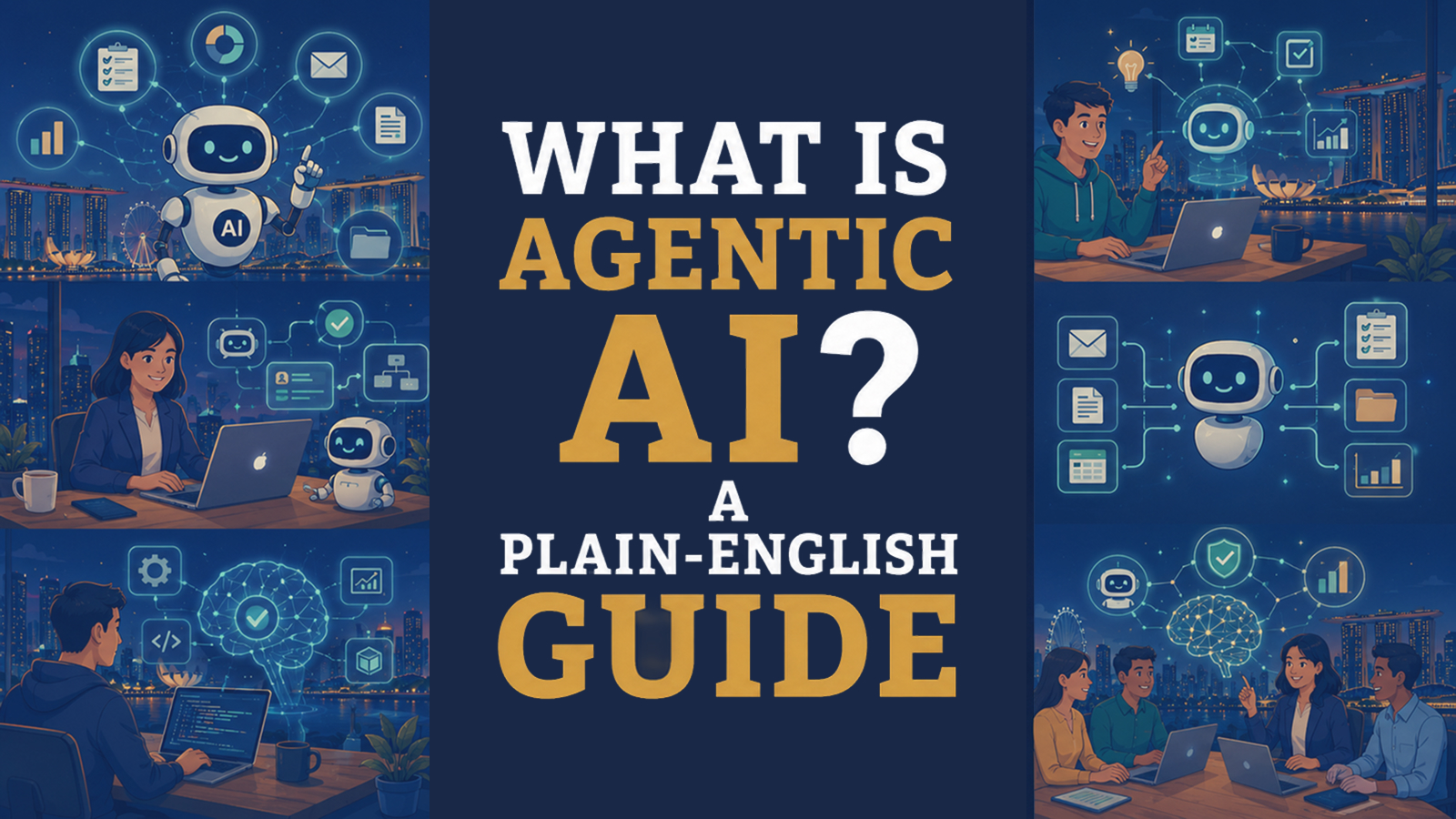
Table of Contents


TL;DR: What Is Agentic AI? A Plain-English Guide
- Agentic AI refers to AI systems designed to interpret defined goals, plan tasks, select actions within established limits, and complete connected workflows with varying levels of human guidance and oversight.
- Unlike traditional AI, which typically handles one request at a time, Agentic AI can manage entire processes. Depending on the tools, permissions, data, and safeguards available, an Agentic AI system may research trends, generate content, prepare a posting schedule, and analyze available performance data as part of a connected workflow.
- Agentic AI is being explored in industries such as healthcare, finance, marketing, education, retail, and logistics to improve efficiency and support decision-making. However, human oversight remains essential to ensure accuracy, safety, and responsible use.
- Learning AI may help learners develop knowledge in areas such as programming, data handling, computational thinking, machine learning, and responsible AI, depending on the programme curriculum and individual participation.
What Is Agentic AI? A Plain-English Guide
Artificial intelligence (AI) is becoming part of everyday life. Whether you’re using a chatbot to ask a question, getting movie recommendations from a streaming service, or using navigation apps to find the fastest route home, AI is already helping people make decisions and complete tasks. Now, a new term is appearing more often in technology news and business discussions: Agentic AI. It might sound complicated, but the idea is actually quite simple.
Agentic AI refers to AI systems designed to pursue defined goals by planning tasks, selecting actions, and using available tools within established permissions, rules, and safeguards. Instead of waiting for someone to tell it what to do after every step, it can determine the next action on its own within the limits set by its programming. If you’re curious about AI, considering studying it, or simply trying to understand where technology is heading, exploring AI learning opportunities for future careers can help you build a stronger understanding of emerging technologies.
What Is Agentic AI?
Agentic AI refers to AI systems that are designed to work more independently to achieve a specific objective. Most AI tools people use today are reactive. They respond when someone gives them a prompt or asks a question. For example, if you ask an AI chatbot to summarize an article, it completes that task and waits for your next instruction. Agentic AI takes things a step further. Rather than handling one request at a time, it can break a larger goal into smaller tasks, decide the order in which those tasks should happen, and adapt if something changes along the way. Think of it like this. Imagine you’re planning a holiday. A traditional AI tool might help you find hotels if you ask, then suggest restaurants after you ask another question, and finally recommend places to visit once you ask again. Where connected to suitable travel tools and current data, an Agentic AI system could take a single goal such as “Help me plan a five-day holiday in Singapore” and then:
- Research flights
- Compare hotel options
- Create a travel itinerary
- Suggest attractions based on your interests
- Estimate your travel budget
- Recommend restaurants
- Organise everything into a schedule
Instead of waiting for instructions after every step, it works through the process to achieve the overall goal.
Why Is It Called “Agentic”?
The word “agentic” comes from the idea of an agent, something that can take action to accomplish a task. That doesn’t mean the AI is making completely independent decisions like a human. Instead, it means the system has been designed to:
- Understand a goal
- Plan multiple steps
- Choose appropriate actions
- Use feedback or new information to adjust its next steps, where the system is designed to do so.
It still operates within rules created by developers and users. In other words, Agentic AI is more autonomous than traditional AI, but it is not fully independent.
How Is Agentic AI Different from Traditional AI?
One of the easiest ways to understand Agentic AI is to compare it with the AI systems many people already know.
| Traditional AI | Agentic AI |
| Responds to prompts | Works toward goals |
| Completes one task | Completes multiple connected tasks |
| Waits for the next instruction | Plans the next step automatically |
| Limited decision-making | Makes decisions within defined rules |
| Mostly reactive | More proactive |
Here’s another simple example. Suppose a company wants to prepare a monthly sales report. A traditional AI assistant might:
- Summarise sales data after receiving it.
Where connected to authorised business systems, an Agentic AI system might:
- Collect sales figures
- Check for missing information
- Create charts
- Write a summary
- Compare this month’s performance with previous months
- Prepare a presentation for managers
The goal stays the same, but Agentic AI manages much more of the process.
How Does Agentic AI Work?
Although the technology behind Agentic AI involves advanced computer science, the basic process is fairly easy to understand. Most Agentic AI systems follow a series of steps.
Step 1: Understand the Goal
Everything begins with a clear objective.
For example:
“Create a social media campaign for our new product.”
The system interprets the stated objective and any success criteria, constraints or instructions provided by the user or developer.
Instead of immediately producing content, it considers what needs to happen first.
Step 2: Create a Plan
Next, the AI breaks the larger goal into smaller tasks.
For a marketing campaign, this might include:
- Researching the target audience
- Reviewing previous campaigns
- Generating campaign ideas
- Writing captions
- Creating a posting schedule
- Defining proposed performance indicators or preparing a framework for later performance review.
This planning stage is one of the biggest differences between Agentic AI and traditional AI.
Step 3: Complete Individual Tasks
Once the plan is ready, the AI begins completing each task. It may use different software tools, databases, or online resources depending on what it has access to.
For example, it could:
- Analyse customer feedback
- Review website traffic
- Compare competitor information
- Draft content
- Organise files
Each completed task moves the project closer to the overall objective.
Step 4: Monitor Progress
Unlike simpler AI systems, Agentic AI doesn’t necessarily continue with the original plan if circumstances change. Imagine a delivery company using Agentic AI. If traffic delays occur, the system may recommend or apply an alternative route according to predefined operational rules rather than following the original schedule. This ability to adapt makes Agentic AI useful for situations where conditions change quickly.
Step 5: Deliver Results
Finally, the AI combines all of its work into a finished result.
Depending on the task, this could be:
- A completed report
- A travel itinerary
- A marketing campaign
- Customer support responses
- A business analysis
Human review is still important, especially when important decisions are involved.
Real-Life Examples of Agentic AI
Agentic AI isn’t just a future concept. Many organizations are already exploring ways to use it in everyday work. Here are some practical examples.
Customer Service
Many businesses already use AI chatbots to answer common questions. Agentic AI can take this a step further. Instead of simply answering “Where is my order?” it may:
- Check the customer’s account
- Track the shipment
- Identify delays
- Initiate or recommend a replacement process where the system has the required authority and company rules allow it.
- Notify the customer about the next steps
- Update authorised company records where appropriate permissions and safeguards are in place.
This approach may reduce the number of manual steps involved, depending on system design and organisational workflows.
Healthcare Administration
Healthcare professionals spend a significant amount of time on administrative work. Agentic AI may help by:
- Scheduling appointments
- Organising patient records
- Sending appointment reminders
- Preparing reports
- Managing administrative workflows
Healthcare providers continue making medical decisions, while AI supports routine administrative tasks. Healthcare professionals remain responsible for clinical assessment and decision-making. AI use should be subject to appropriate human review, privacy safeguards, institutional policies and applicable regulations
Marketing
Marketing teams often complete many repetitive tasks every week. An Agentic AI system could:
- Research industry trends
- Analyse customer behaviour
- Suggest campaign ideas
- Draft blog outlines
- Write social media captions
- Recommend publishing schedules
- Monitor campaign performance
Depending on how it is implemented, Agentic AI may reduce time spent on selected routine tasks, allowing marketing professionals to focus more on planning, review, and creative decision-making.
Finance
Financial organizations process large amounts of information every day. Agentic AI may assist by:
- Monitoring transactions
- Identifying unusual spending patterns
- Preparing financial summaries
- Organising reports
- Supporting compliance checks
Human oversight remains essential, particularly when financial decisions affect customers.
Education
Educational institutions are also exploring AI in various ways. Agentic AI may support learning by:
- Creating personalised study plans
- Tracking assignment deadlines
- Recommending learning resources
- Providing instant feedback on quizzes
- Helping students organise their coursework
Teachers continue to play the central role in education, while AI helps streamline routine tasks.
Logistics and Supply Chains
Companies that move products around the world face constant changes. Weather, traffic, supplier delays, and customer demand all affect deliveries. Agentic AI may:
- Monitor inventory
- Predict shortages
- Suggest alternative suppliers
- Optimise delivery routes
- Track shipments in real time
This can help businesses respond more quickly to unexpected situations.
Why Is Agentic AI Becoming More Important?
Many organisations manage large volumes of information across multiple systems. Managing that information manually is becoming increasingly difficult. At the same time, customers expect faster responses, quicker deliveries, and more personalized services. Agentic AI offers one possible solution by helping organizations automate complex workflows rather than isolated tasks.
Instead of simply making work faster, it can also improve coordination between different systems. For example, a retailer could use Agentic AI to monitor inventory, update online product listings, notify suppliers about low stock, and inform customers about delivery times, all as part of one connected workflow. As organizations explore AI adoption, knowledge of AI concepts, limitations, responsible use and practical applications may be relevant across a growing range of professional settings in different industries through practical artificial intelligence education.
AI-related knowledge may be relevant across sectors such as business, healthcare, marketing, finance, education and logistics. Employment outcomes depend on qualifications, experience, role requirements and labour-market conditions.
Benefits of Agentic AI
As AI technology continues to evolve, many organizations are exploring how Agentic AI can support everyday work. While the technology is still developing, it has the potential to improve efficiency in many industries by helping people manage routine or time-consuming tasks.
Here are some of its potential benefits.
1. Saves Time on Repetitive Tasks
Many jobs involve completing the same processes every day, such as organizing files, preparing reports, responding to common customer inquiries, or scheduling appointments. Agentic AI can automate many of these tasks, allowing employees to spend more time on activities that require creativity, communication or problem-solving.
For example, instead of manually collecting information from several spreadsheets, an AI agent may gather the data, organize it into a report and highlight important trends for review.
2. Supports Better Decision-Making
Businesses often need to analyse large amounts of information before making decisions. AI systems may process large datasets efficiently and identify statistical patterns for human review, although outputs depend on data quality, system design, and appropriate interpretation. For example, a retail business could use AI to analyse customer purchasing habits and identify products that are becoming more popular. Managers can then use this information, along with their own judgement, to make business decisions.
3. Improves Workflow Efficiency
Many workplace tasks depend on several departments working together. Agentic AI can help connect these processes by completing tasks in the correct order. For example, after a customer places an online order, an AI system may:
- Confirm payment
- Update inventory
- Notify the warehouse
- Arrange delivery
- Send tracking information to the customer
Instead of handling each step separately, the AI helps keep the workflow organized.
4. Works Around the Clock
Unlike people, AI systems can continue processing tasks at any time of day. This can be useful for organizations that operate internationally or provide customer support across different time zones. However, human oversight remains important to ensure quality, accuracy, and responsible decision-making.
Challenges and Limitations of Agentic AI
Although Agentic AI offers many possibilities, it also has limitations. Understanding these challenges is just as important as understanding its benefits.
AI Can Make Mistakes
AI systems learn from data and follow programmed instructions, but they are not perfect. They may misunderstand information, generate inaccurate responses or make recommendations based on incomplete data. This is why important decisions should still involve human review.
Privacy and Security Matter
Some AI systems process sensitive information, such as financial records or customer details. Organizations need clear policies to protect personal data and comply with relevant privacy regulations. Responsible AI use includes protecting information and using it appropriately.
Ethical Considerations
As AI becomes more capable, ethical questions become increasingly important. For example:
- Should AI make decisions that affect people’s lives?
- How can organizations reduce bias in AI systems?
- Who is responsible if an AI system makes an error?
These are ongoing discussions among technology professionals, governments, and businesses around the world.
Human Skills Are Still Essential
AI can automate many tasks, but it cannot replace qualities such as empathy, creativity, leadership, and ethical judgment. In many workplaces, the most effective approach is for people and AI to work together rather than one replacing the other.
Which Industries Are Using Agentic AI?
Agentic AI is being explored across a wide range of industries. While adoption varies between organizations, interest continues to grow as AI technology develops. Some examples include:
Healthcare
AI may support administrative tasks, appointment scheduling, and data management, allowing healthcare professionals to focus more on patient care.
Finance
Financial institutions are exploring AI for fraud detection, reporting, risk analysis, and customer support.
Retail
Retailers may use AI to manage inventory, personalise customer experiences, and forecast demand.
Manufacturing
Manufacturers can use AI to monitor equipment, predict maintenance needs, and improve production planning.
Logistics
AI may help optimize delivery routes, monitor supply chains, and improve warehouse operations.
Marketing
Marketing professionals are using AI to analyse customer behavior, generate content ideas, and support campaign planning.
Education
Educational institutions are exploring AI tools that assist with personalized learning, administrative tasks, and student support.
As AI continues to develop, new applications are likely to emerge across many other sectors.
Skills That Can Help You Work with Agentic AI
You don’t need to be an experienced software engineer to begin learning about AI. Many careers now benefit from a basic understanding of how AI systems work. Some useful skills include:
- Digital literacy
- Critical thinking
- Problem-solving
- Data analysis
- Basic programming concepts
- Communication skills
- Understanding machine learning fundamentals
- Ethical and responsible AI practices
These skills can help learners understand how AI supports business processes and how to work effectively alongside AI technologies. For students interested in technology, developing both technical and transferable skills can provide a strong foundation for future learning.
Why Learning AI Matters
AI is no longer limited to technology companies. Today, businesses of all sizes are exploring how AI can improve customer service, business operations, healthcare, education, finance, and many other areas.
As AI tools become more widely available across industries, some roles may require employees to understand how AI systems are used, evaluated, and governed responsibly. Learning about AI may be relevant to learners from a range of academic and professional backgrounds.
Whether someone plans to work in business, marketing, healthcare, or technology, understanding AI may help learners become more familiar with digital tools used in different workplace settings.
Studying AI: Where Can You Start?
If you’re considering studying artificial intelligence, it’s worth looking for programmes that focus on both theory and practical application.
When comparing AI programmes, learners may consider the balance between foundational theory, practical implementation, assessment methods, responsible AI content, programme level and entry requirements.
Topics may include:
- Programming fundamentals
- Data analysis
- Machine learning concepts
- AI applications across industries
- Responsible and ethical AI
- Practical projects
- Problem-solving using AI tools
Programme structures and entry requirements vary depending on the institution, so it’s helpful to compare several options before making a decision.
United Ceres College offers a Diploma and an Advanced Diploma in Applied Artificial Intelligence. The Diploma establishes foundations in computational thinking, logic and mathematics, data structures and algorithms, database application development, machine learning, and user experience design. The Advanced Diploma progresses into computer vision, conversational AI, deep learning, MLOps, natural language processing and generative AI systems, including agentic architectures. Both programmes are delivered through blended learning over eight months and use project reports as the stated assessment method. Prospective students should review the official programme pages for the latest admission criteria, curriculum, delivery arrangements and intake dates.”
Frequently Asked Questions
Is Agentic AI the same as generative AI?
Not exactly. Generative AI creates new content such as text, images, or code based on user prompts. Agentic AI focuses on planning and completing multi-step tasks to achieve a broader goal. Some AI systems combine both capabilities.
Do I need programming experience to learn about AI?
Not always. Many introductory AI programmes begin with fundamental concepts and are intended to support learners who are new to programming. Entry requirements vary between institutions.
Can Agentic AI replace human workers?
Agentic AI can automate certain tasks, particularly repetitive or data-heavy processes. However, many jobs require human judgment, creativity, communication, and ethical decision-making. In many workplaces, AI is used to support employees rather than replace them.
Which careers may benefit from AI knowledge?
People working in areas such as the following:
- Business
- Marketing
- Healthcare
- Finance
- Logistics
- Customer service
- Education
- Data analysis
may benefit from understanding how AI tools are used in their industries. Career opportunities depend on individual qualifications, experience, and employer requirements.
Is AI only for technology professionals?
No. AI is becoming part of many industries. Even professionals in non-technical roles increasingly use AI-powered tools to improve productivity and support everyday work. Having a basic understanding of AI can help people work more effectively alongside these technologies.
Final Thoughts
Agentic AI represents an important step in the evolution of artificial intelligence. Rather than simply responding to individual prompts, it is designed to plan, make decisions, and complete a series of connected tasks that work toward a larger goal. While the technology continues to evolve, it is already influencing how organizations approach customer service, business operations, healthcare, education, logistics, and many other fields. Understanding Agentic AI doesn’t require an advanced technical background. By learning the fundamentals, recognizing its strengths and limitations, and exploring how it is applied in real-world settings, students and professionals can build confidence in using AI responsibly. If you’re considering studying AI, look for career-focused AI learning programmes that combine practical learning with a strong understanding of ethics, problem-solving, and real-world applications.
Developing these skills may help learners build familiarity with AI technologies and responsible-use practices as they continue to become more widely integrated into many professional environments, while recognizing that individual career outcomes depend on your qualifications, experience, and the needs of employers.
Disclaimer : This article is provided for general educational purposes. AI capabilities vary depending on system design, available tools, permissions, data quality, and human oversight. Programme content, entry requirements, delivery arrangements, and learning outcomes vary by course and may be updated. Completion of an AI programme does not guarantee employment, promotion, salary increases, or a particular career outcome. Prospective students should refer to United Ceres College’s official course pages and current admissions information before applying.