



Diploma in Applied Artificial Intelligence Singapore
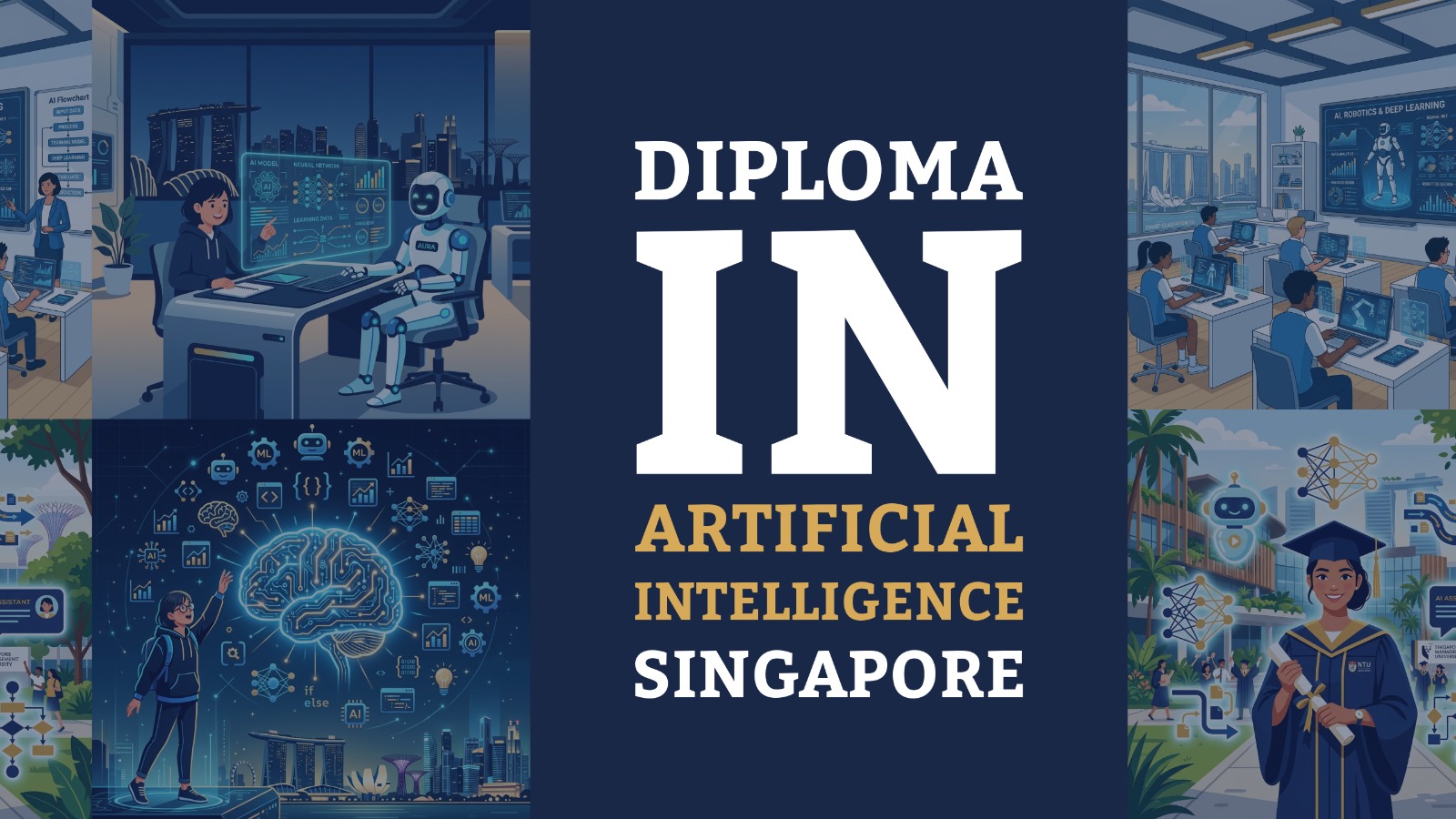
Table of Contents

TL;DR: Diploma in Applied Artificial Intelligence Singapore
- A diploma in applied artificial intelligence in Singapore helps students build practical AI and technology skills for modern industries.
- Students learn computational thinking, programming fundamentals, logic and mathematics, data structures and algorithms, machine learning, and user experience design through practical learning activities.
- Singapore is becoming one of Asia’s fastest-growing technology and innovation hubs, making AI education highly relevant.
- AI diploma programs often focus on practical applications rather than purely theoretical concepts.
- Graduates may explore entry-level opportunities related to AI support, data-related roles, database applications, digital technologies, and other technology-related functions, depending on their qualifications, experience, and employer requirements.
- Institutions like United Ceres College support students through industry-focused and career-oriented learning pathways.
- AI-related knowledge is increasingly relevant across industries that are adopting digital technologies, including healthcare, finance, logistics, marketing, and technology.
Diploma in Applied Artificial Intelligence Singapore
Artificial intelligence used to feel like something distant. Almost futuristic. People associated it with robots, science fiction movies, or giant tech companies operating somewhere far away in Silicon Valley. But now? AI is quietly becoming part of everyday life. Sometimes people don’t even notice it anymore. Recommendation systems on Netflix. Chatbots handling customer service. Fraud detection in banking. Smart logistics systems. AI-powered marketing tools. Automated healthcare analysis. It’s everywhere now, woven into industries people interact with daily.
That’s one reason why more students are searching for programs like a diploma in applied artificial intelligence in Singapore. The field no longer feels experimental. It feels practical, increasingly relevant across many industries, and, honestly, difficult to ignore. Singapore has positioned itself as one of Asia’s strongest technology and innovation hubs. So naturally, AI-related education has expanded in response to growing interest in digital technologies. And interestingly, many students pursuing AI studies today are not traditional “tech geniuses” either. Some come from business backgrounds. Others from marketing, administration, engineering, or completely unrelated fields. The technology world is becoming more interdisciplinary than people expected.
Why Artificial Intelligence Matters Today
Artificial intelligence is transforming how businesses make decisions, automate tasks, and analyze information. Companies now rely on AI systems to:
- Predict customer behavior
- Improve operational efficiency
- Analyze large amounts of data
- Automate repetitive processes
- Improve cybersecurity
- Personalize digital experiences
- Support business decision-making
And realistically speaking, this shift is only accelerating. Many organisations are incorporating AI technologies into their operations and may seek employees with knowledge of AI-related concepts, depending on their business needs. Not necessarily researchers building advanced algorithms from scratch, but professionals who can apply AI technologies effectively within organizations. That distinction matters. According to United Ceres College’s published curriculum, the Diploma in Applied Artificial Intelligence emphasises practical implementation and real-world problem solving supported by programming, databases, machine learning, and user-centred design.
Why Study Applied Artificial Intelligence in Singapore?
Singapore has become one of Asia’s leading technology ecosystems. The country invests heavily in:
- Digital transformation
- Smart technologies
- AI innovation
- Data infrastructure
- Technology education
Global companies, startups, fintech firms, logistics companies, and healthcare organizations all operate within Singapore’s rapidly evolving digital economy. That environment creates strong opportunities for students studying AI-related fields. Another major advantage is Singapore’s international exposure. Students interact with people from different educational and cultural backgrounds while learning technologies used globally. And honestly, studying AI in a city already adopting advanced technologies daily makes learning feel more relevant somehow. You see practical applications everywhere around you.
What Students Learn in an Applied Artificial Intelligence Diploma
AI programs usually combine technical knowledge with practical industry applications.
Machine Learning Fundamentals
Students are introduced to machine learning principles and supervised learning concepts, including the development of simple predictive models through practical activities. No, it’s not always as impossibly complicated as social media sometimes makes it sound. Good diploma programs simplify concepts gradually.
Database Application Development
Data drives modern AI systems. Students explore:
- Relational databases
- Database query language
- Database design
- Database implementation
Understanding data has become valuable across almost every industry now.
Programming Skills
Many AI diploma programs introduce topics such as:
- Programming fundamentals
- Computational thinking
- Basic programming concepts
- Problem-solving
Programming knowledge supports learners in developing structured solutions and implementing simple AI-related computing tasks.
Computational Thinking
Students learn structured problem-solving approaches used in programming and computing. Topics include computational thinking, basic programming concepts, simple data structures, and programming techniques.
Logic and Mathematics
Learners explore mathematical concepts supporting computing, including logic, functions, probability, sequences, recursion, and algorithm development.
Data Structures and Algorithm
Students learn how data is organised and processed efficiently through concepts such as recursion, stacks, queues, linked lists, searching techniques, and sorting algorithms.
User Experience and Interface Design
Learners study human-centred design principles, usability, accessibility, interface prototyping, and user experience design.
Throughout the programme, learners complete practical learning activities and project-based assessments that encourage them to integrate programming, databases, machine learning, and user-centred design concepts to solve real-world problems.
Admission Requirements for AI Diploma Programs in Singapore
Applicants interested in the Diploma in Applied Artificial Intelligence at United Ceres College must satisfy the institution’s published admission requirements. Applicants should always refer to the latest official course information, as admission policies may be updated.
Academic Requirements
Applicants should meet one of the following:
- Passed any 3 subjects in the GCE O-Level examination or an equivalent qualification; or
- Completed 12 years of formal education; or
- Completed the United Ceres College Certificate in General Management.
Language Requirements
Applicants should meet one of the following:
- IELTS 5.5 or equivalent; or
- Score 70 in the United Ceres College English Placement Test; or
- Completed the United Ceres College Certificate in English Level 3 or Certificate in English Language.
Mature Applicants
Applicants who are 30 years old or above with at least 8 years of working experience may be considered under the Mature Applicant pathway. Applicants are required to submit a résumé or other supporting documents for assessment.
Minimum Age
Applicants must be at least 17 years old.
United Ceres College offers monthly intakes. Prospective students should refer to the Academic Calendar or contact the College for the latest intake dates and admission information.
Who Should Study Applied Artificial Intelligence?
One misconception is that AI education is only for hardcore programmers or advanced mathematicians. That’s not entirely true anymore.
School Graduates
Students interested in technology and future-focused careers often pursue AI diplomas as foundational qualifications.
Working Professionals
Professionals already working in administration, operations, or business environments may study AI to improve digital and analytical skills.
Career Changers
Some individuals transition into technology-related careers later in life after realizing how rapidly industries are digitizing. And honestly, that’s becoming increasingly common.
Career Opportunities After Graduation
Artificial intelligence skills now connect to multiple industries rather than one narrow career path. Graduates may explore entry-level technology-related roles depending on:
- Employer requirements
- Experience
- Further study
Of course, advanced AI engineering positions often require higher-level qualifications later. But diploma programs provide strong starting foundations. And foundations matter more than people sometimes admit.
Why Students Choose United Ceres College
Many students researching a diploma in applied artificial intelligence in Singapore explore programs offered through United Ceres College because of its career-focused and industry-oriented learning approach. The Diploma in Applied Artificial Intelligence is offered in both Full-Time and Part-Time study modes over 8 months through Blended delivery. Assessment is based on Project Reports (100%), allowing learners to demonstrate practical application of the knowledge gained throughout the programme. Modern students usually want an education that feels connected to actual workplace expectations. Purely theoretical learning without practical relevance can feel frustrating, especially in fast-changing technology fields. The programme helps learners build foundations in:
- Computational thinking
- Programming
- Machine learning
- Database development
- User-centred design through practical learning activities.
Supportive learning environments become especially important in technical fields where students may initially feel intimidated by complex concepts.
The Growing Demand for AI Skills
Artificial intelligence is no longer limited to giant tech corporations only. Smaller businesses are adopting AI tools too. Retail companies use AI forecasting systems. Marketing teams use AI content analysis tools. Healthcare providers rely on AI-supported diagnostics. Logistics firms optimize delivery systems using predictive analytics. Even customer service operations increasingly depend on AI-powered systems. This widespread adoption means AI literacy is becoming valuable across industries, not just within software companies. That’s a major reason why AI education continues to grow globally.
Challenges Students Should Expect
To be fair, AI studies require consistent practice and engagement.
Students often need to develop the following:
- Analytical thinking
- Technical adaptability
- Patience with problem-solving
- Consistency with practice
- Comfort using digital tools
Sometimes students struggle initially with coding or data concepts. That’s normal. Technology learning often feels confusing before it starts making sense. Most learners experience that stage.
Is an Applied Artificial Intelligence Diploma Worth It?
The value of an Applied Artificial Intelligence diploma depends on an individual’s interests, learning goals, and career objectives. Especially for individuals who:
- Want future-focused career skills
- Enjoy technology and innovation
- Prefer practical digital learning
- Want flexible industry opportunities
- Hope to develop analytical abilities
AI education continues expanding because industries themselves are changing rapidly. And honestly, understanding technology is becoming increasingly relevant across many industries and more professionally necessary in many careers.
Final Thoughts
A diploma in applied artificial intelligence in Singapore offers students an opportunity to build practical technology skills within one of Asia’s most digitally advanced education and business environments. Singapore’s innovation-driven economy, multicultural learning atmosphere, and international business ecosystem make it a strong destination for students interested in AI and emerging technologies. Institutions like United Ceres College continue to support learners through practical, industry-relevant education pathways designed for modern workplaces and evolving technology demands. And realistically, artificial intelligence is not replacing every human job tomorrow like dramatic headlines sometimes suggest. Digital literacy and technology-related skills are increasingly relevant in many workplaces.
Frequently Asked Questions (FAQs)
1. What is a diploma in applied artificial intelligence in Singapore?
A diploma in applied artificial intelligence in Singapore teaches students practical AI concepts, machine learning basics, data structures, algorithm, and automation technologies. The program focuses on real-world industry applications rather than purely theoretical learning. Students develop digital problem-solving skills useful across business, healthcare, logistics, finance, and modern technology-driven industries globally.
2. What are the admission requirements for AI diploma programs in Singapore?
Applicants should satisfy the published admission requirements, including one of the recognised academic qualifications such as passing any three GCE O-Level subjects (or equivalent), completing 12 years of formal education, or completing the United Ceres College Certificate in General Management. Applicants should also meet the English language requirement through IELTS 5.5 (or equivalent), the United Ceres College English Placement Test, or an approved English qualification. Mature Applicants aged 30 years and above with at least eight years of working experience may also be considered, subject to the College’s admission requirements.
3. Is coding required for studying applied artificial intelligence?
Basic coding is usually included within the diploma program itself, so advanced programming knowledge is not always necessary before admission. Students often learn beginner-friendly programming concepts that are introduced during the course. Strong analytical thinking, curiosity, adaptability, and willingness to practice technical concepts matter more initially than expert coding experience alone.
4. What career opportunities are available after completing the diploma?
Graduates may explore entry-level technology-related roles depending on their qualifications, work experience, employer requirements, and labour market conditions. Some graduates may also pursue further study in computing, artificial intelligence, or related disciplines. Entry-level technology roles continue growing across industries, including healthcare, finance, logistics, marketing, and retail. Many students also continue advanced studies later to specialize further within the artificial intelligence fields professionally. Career opportunities depend on qualifications, work experience, employer requirements, and labour market conditions.
5. Why choose United Ceres College for applied artificial intelligence studies?
United Ceres College supports students through practical, industry-oriented education pathways designed for modern technology environments. The institution focuses on practical learning activities based on the published curriculum. Students benefit from supportive academic guidance while developing applied artificial intelligence knowledge aligned with current industry expectations and evolving career opportunities globally. You do not have enough Humanizer words left. Upgrade your Surfer plan.