



Building an AI-Ready Workforce: A Guide for HR and L&D Leaders in Asia
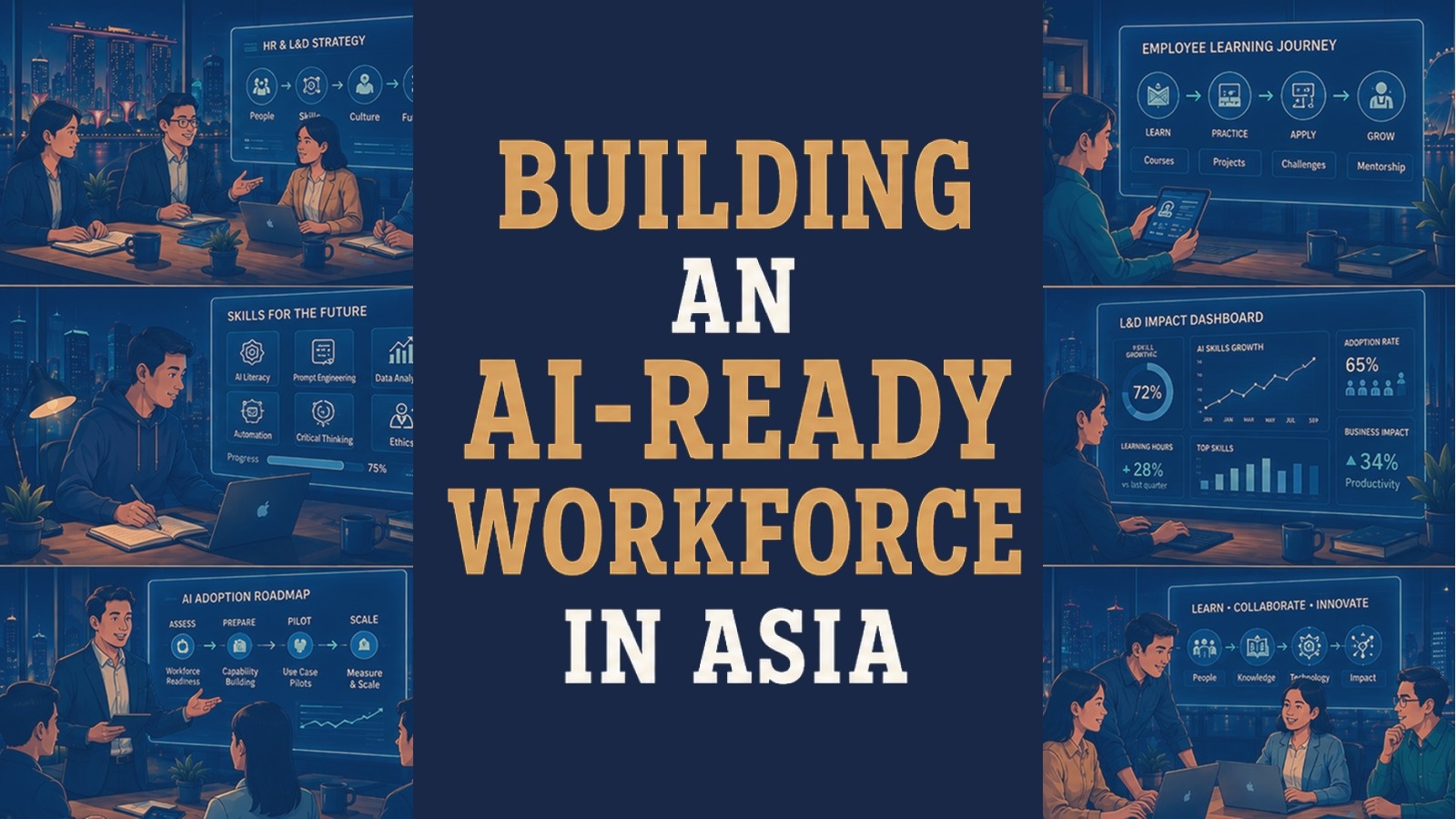
Table of Contents

TL;DR: Building an AI-Ready Workforce
- An AI-ready workforce is not just about hiring AI specialists. It involves helping employees across different roles develop the knowledge and skills needed to work effectively with AI technologies.
- HR and Learning & Development (L&D) leaders play a key role in identifying skill gaps, creating upskilling strategies, and supporting responsible AI adoption across the organization.
- Practical AI training can help employees build knowledge relevant to AI-enabled workflows, while organisations can use learning initiatives to support broader workforce-development and digital-transformation goals. Outcomes depend on the training design, workplace context and how AI is implemented.
- United Ceres College offers Diploma and Advanced Diploma programmes in Applied Artificial Intelligence for learners interested in developing structured AI knowledge. Prospective learners and sponsoring organisations should review each programme’s curriculum, entry requirements, delivery mode and learning outcomes before enrolment.
Artificial intelligence is becoming part of everyday business operations across Asia. From customer service chatbots and automated reporting to data analysis and content creation, AI is changing how organizations work and how employees perform their roles. For HR and Learning & Development (L&D) leaders, this shift raises an important question: How can organizations prepare employees to work confidently and responsibly with AI?
The answer goes beyond purchasing AI software or hiring a few technical specialists. Building an AI-ready workforce requires a structured approach to developing skills, encouraging continuous learning, and helping employees understand how AI can support, not replace, their work. This guide explains what an AI-ready workforce looks like, why it matters for organizations in Asia, and how HR and L&D leaders can begin creating an effective AI upskilling strategy.
What Does an AI-Ready Workforce Mean?
An AI-ready workforce consists of employees who have the knowledge, skills to use AI tools appropriately within their roles.
This does not mean every employee needs to become a machine learning engineer or data scientist. Instead, different teams require different levels of AI knowledge depending on their responsibilities.
For example:
- A marketing team may learn how to use AI for campaign planning and content creation.
- HR professionals may explore AI tools that assist with recruitment, onboarding, or employee engagement.
- Finance teams may use AI to analyze data and identify trends.
- Customer service teams may work alongside AI chatbots to improve response times.
The goal is to develop AI literacy and practical skills relevant to employees’ roles, while maintaining appropriate judgement, verification and accountability.
Why Is AI Workforce Readiness Important in Asia?
Across Asia, organisations are investing in digital transformation to remain competitive in rapidly evolving markets. AI is becoming part of this transformation by helping businesses automate routine tasks, analyze large volumes of data, and improve customer experiences. However, technology alone is not enough. Without employees who understand how to use AI effectively, organizations may struggle to realize the full value of their investment.
Organisations may develop AI-learning initiatives to support goals such as:
- improving AI literacy;
- supporting adoption of new workflows;
- strengthening critical evaluation of AI outputs;
- developing role-relevant digital skills;
- supporting responsible AI use; and
- preparing teams for changes in technology and work processes.
For HR and L&D leaders, preparing employees today may help organizations respond more effectively to future workplace changes.
Why HR and L&D Leaders Play a Critical Role
Many people assume AI adoption is solely the responsibility of IT departments. In reality, HR and L&D teams are central to successful workforce transformation because they are responsible for developing people, identifying skill gaps, and supporting organizational change. Their responsibilities may include:
- Identifying AI-related training needs.
- Developing learning pathways.
- Supporting employee engagement.
- Encouraging responsible AI practices.
- Measuring learning outcomes.
- Promoting a culture of continuous learning.
Rather than introducing AI as a one-time initiative, HR leaders can help embed AI learning into long-term workforce development strategies.
Hypothetical Example
Imagine a regional retail company introducing AI-powered customer service tools. The technology is ready, but employees may be unfamiliar with using it. HR and L&D teams could introduce AI awareness sessions, hands-on workshops, practical demonstrations and ongoing support to help employees learn how the tools can be used within their roles.
Employees have opportunities to practise using the new tools, while managers can monitor whether the training improves adoption, workflow quality or customer-service processes. This example shows that successful AI adoption depends not only on technology but also on people.
Skills Every AI-Ready Workforce Should Develop
Not every employee needs advanced technical expertise, but organizations can benefit when employees develop a shared understanding of AI and its practical applications.
AI Awareness
Employees should understand:
- What artificial intelligence is.
- Where AI is used in the workplace.
- What AI can and cannot do.
- Common AI terminology.
- The benefits and limitations of AI.
This foundational knowledge helps reduce uncertainty and encourages informed decision-making.
Digital Literacy
Digital literacy is an important foundation for employees learning to work with AI tools. Employees should feel comfortable:
- Using digital tools.
- Managing information.
- Navigating cloud-based platforms.
- Understanding digital workflows.
- Learning new technologies.
Strong digital literacy provides a foundation for AI adoption across different departments.
Critical Thinking
AI can generate valuable insights, but employees still need to evaluate the quality of those outputs. Critical thinking involves asking questions such as:
- Is this information accurate?
- Does it align with business objectives?
- Are there potential risks or biases?
- Should the output be verified?
Human judgement remains essential, particularly when AI supports important business decisions.
Communication Skills
Working with AI often involves giving clear instructions and explaining AI-generated results to colleagues or clients. Employees who communicate effectively can:
- Write clearer prompts.
- Communication and AI Interaction
- Collaborate across teams.
- Share AI-related knowledge.
These communication skills support better collaboration between people and AI systems.
Problem-Solving
AI tools can assist employees with certain workplace tasks and challenges.
Employees should learn how to:
- Identify repetitive tasks.
- Recognise opportunities for automation.
- Evaluate possible AI solutions.
- Improve existing workflows.
Rather than asking, “How do we use AI?” organizations benefit when employees ask, “Which business problem are we trying to solve?”
Technical Skills vs AI Literacy
One common misconception is that every employee must become highly technical. In reality, organisations often need a combination of technical specialists and employees with general AI literacy. The following comparison highlights the difference.
| Technical AI Skills | AI Literacy |
| Programming and coding | Understanding AI concepts |
| Machine learning development | Using AI tools effectively |
| Building AI models | Evaluating AI-generated outputs |
| Data engineering | Recognising AI opportunities in daily work |
| Advanced technical expertise | Practical workplace application |
Both skill sets contribute to building an AI-ready workforce, but not every role requires advanced technical knowledge.
Identifying AI Skill Gaps
Before launching AI training programs, HR and L&D leaders should understand their organization’s current capabilities.
Some useful questions include:
- Which teams already use AI tools?
- What digital skills do employees currently have?
- Which roles are most likely to be affected by AI adoption?
- Where do employees need additional support?
- What business objectives should AI training support?
Conducting a skills assessment can help organizations prioritize training resources and create learning pathways that align with organizational goals rather than offering the same training to every employee.
Creating an AI Workforce Development Strategy
Once organizations understand their current skill levels, the next step is creating a structured plan for developing an AI-ready workforce.
Rather than introducing AI training as a one-off initiative, HR and L&D leaders can build a long-term learning strategy that aligns with business priorities. An effective strategy often includes:
- Assessing workforce capabilities.
- Identifying priority departments.
- Defining learning objectives.
- Providing role-specific training.
- Measuring learning outcomes.
- Updating programs as AI technology evolves.
A structured approach may help employees build confidence gradually while supporting organizational goals.
Step 1: Align AI Learning with Business Goals
AI training is most effective when it supports real business needs. Instead of asking, “Which AI course should we offer?” organisations should first ask:
- Which business challenges are we trying to solve?
- Which teams will benefit most from AI?
- Which workflows or business problems could AI potentially support?
- What skills will employees need over the next few years?
For example, if a company wants to improve customer support, AI learning may focus on chatbot management, customer communication, and workflow automation rather than advanced machine learning.
Real-Life Example
A logistics company wants to reduce the time employees spend preparing weekly operational reports. Rather than replacing staff, the organization introduces AI tools that automate data summaries. HR and L&D teams provide practical training so employees learn how to:
- Generate reports using AI.
- Verify AI-generated insights.
- Edit and improve final reports.
- Review whether AI-assisted summaries reduce manual preparation time and determine how any time savings could be reallocated.
This approach combines technology with workforce development, helping employees adapt instead of feeling replaced.
Step 2: Segment Learning by Job Role
Not every employee needs the same level of AI knowledge.
Creating role-specific learning pathways makes training more relevant and engaging.
HR Teams
HR professionals may explore how AI can assist with administrative and analytical tasks related to recruitment, onboarding, employee engagement, and learning, subject to organizational policies, applicable data-protection requirements, and appropriate human oversight. HR professionals may benefit from learning how AI can support:
- Recruitment administration and workflow support
- Drafting or organising recruitment materials
- Employee-engagement analysis
- Learning and development support
AI use in employment-related decisions should remain subject to applicable laws, data-protection requirements, organisational policy and appropriate human review.
Marketing Teams
Marketing professionals may explore AI for:
- Content creation.
- Campaign planning.
- Market research.
- Customer segmentation.
- Social media support.
Finance Teams
Finance employees may learn how AI assists with:
- Data analysis.
- Forecasting.
- Reporting.
- Risk assessment.
- Fraud detection support.
For higher-impact financial use cases, AI outputs should be subject to appropriate validation, governance and human review.
Customer Service Teams
Customer-facing employees may develop skills in:
- Working alongside AI chatbots.
- Managing customer interactions.
- Reviewing AI-generated responses.
- Escalating complex cases appropriately.
Role-based learning can help employees focus on skills relevant to their daily responsibilities.
Step 3: Encourage Practical Learning
Reading about AI is helpful, but applying it in workplace scenarios often leads to better understanding. Practical learning activities may include:
- Hands-on workshops.
- Guided AI demonstrations.
- Department-specific projects.
- Team challenges.
- Case study discussions.
- Collaborative problem-solving exercises.
Employees are more likely to adopt AI when they experience how it supports their own work rather than learning only theoretical concepts.
Real-Life Example
An HR team participates in a workshop where they use AI to draft job descriptions. Instead of accepting the first AI-generated version, participants:
- Refine prompts.
- Review language.
- Check for inclusive wording.
- Ensure the content reflects company values.
The exercise teaches employees that AI works best when combined with human expertise and careful review.
Building a Culture of Continuous Learning
AI technology evolves quickly, making continuous learning essential. Rather than treating AI training as a one-time event, organisations can encourage ongoing development by:
- Offering regular refresher sessions.
- Sharing AI updates and best practices.
- Encouraging peer learning.
- Providing access to learning resources.
- Celebrating successful AI adoption stories.
When learning becomes part of workplace culture, employees are more likely to remain confident as technology changes.
Responsible AI in the Workplace
An AI-ready workforce should understand not only how to use AI but also how to use it responsibly. Training should include topics such as
Data Privacy
Employees should know how to handle sensitive information when using AI tools and follow organisational policies regarding confidential data.
Bias and Fairness
AI systems may reflect biases present in training data. Employees should understand the importance of reviewing AI outputs carefully and recognizing situations where human judgment is necessary.
Transparency
Where appropriate, organizations should encourage transparency about when AI has assisted with creating reports, content, or other outputs.
Human Oversight
AI may support decision-making, but organizations should maintain appropriate human accountability and oversight, particularly for decisions involving legal, ethical, financial, employment, safety, or other significant consequences. These practices can help organisations establish clearer accountability and governance around workplace AI use.
Common Misconceptions About Building an AI-Ready Workforce
Many organizations delay AI adoption because of common misconceptions.
| Misconception | Reality |
| Only IT employees need AI training. | Employees across departments can benefit from understanding how AI applies to their roles. |
| AI will replace the entire workforce. | In many organizations, AI is used to support employees by automating routine tasks while people continue to provide judgment, creativity, and decision-making. |
| AI training is only for large enterprises. | Organizations of different sizes can introduce AI learning based on their goals, resources, and workforce needs. |
| One AI course is enough. | AI evolves rapidly, making continuous learning and skill updates important. |
| Employees will naturally adapt to AI on their own. | Structured learning, practical guidance and ongoing support can give employees clearer opportunities to build knowledge and practise using AI appropriately. |
Understanding these misconceptions can help organizations make informed decisions about workforce development.
Measuring the Success of AI Learning Programmes
HR and L&D leaders should evaluate whether AI learning initiatives are achieving their intended outcomes. Useful indicators may include:
- Employee participation rates.
- Course completion rates.
- Employee confidence when using AI tools.
- Productivity improvements.
- Reduced time spent on repetitive tasks.
- Feedback from managers and employees.
Measuring results helps organizations refine future learning programs and ensure training continues to support business objectives.
Future Trends in AI Workforce Development
Artificial intelligence continues to evolve, and workforce development strategies will need to evolve alongside it. Rather than preparing employees for a single AI tool, organizations should focus on building adaptable skills that remain valuable as technology changes. Some trends HR and L&D leaders across Asia may see include:
Greater AI Integration Across Departments
AI adoption is increasingly extending beyond technical teams into functions such as marketing, finance, HR, operations and customer service. As adoption grows, organizations may expand AI training beyond technical teams to create a more balanced AI-ready workforce.
More Personalised Learning
AI-powered learning platforms can recommend training based on an employee’s role, experience, or skill level.
For example, a customer service representative may receive learning content focused on AI-assisted communication, while a finance professional may be guided toward courses on data analysis and forecasting.
This personalized approach helps employees learn skills that are most relevant to their responsibilities.
Increased Focus on Human Skills
As AI is used for more workplace tasks, organisations may place greater emphasis on capabilities such as critical thinking, communication, judgement and domain expertise. Organizations are expected to place greater emphasis on developing skills such as:
- Critical thinking.
- Communication.
- Creativity.
- Leadership.
- Emotional intelligence.
- Ethical decision-making.
These skills complement AI rather than compete with it, helping employees make informed decisions and work effectively with technology.
Responsible AI Becomes a Workplace Priority
As businesses rely more on AI, organizations are likely to strengthen policies around:
- Data privacy.
- AI governance.
- Ethical AI use.
- Transparency.
- Human oversight.
HR and L&D teams can support these efforts by incorporating responsible AI practices into employee learning programmes.
Creating a Sustainable AI Learning Culture
Building an AI-ready workforce is an ongoing process rather than a one-time initiative. Organizations can support long-term success by encouraging continuous learning through:
- Regular AI awareness sessions.
- Internal knowledge-sharing events.
- Mentoring and peer learning.
- Access to updated learning resources.
- Practical workplace projects.
- Recognition of employees who embrace new technologies.
When learning becomes part of organizational culture, employees may be better prepared to adapt to future technological changes.
Real-Life Example
Consider a regional healthcare organization introducing AI tools to assist with administrative tasks. Instead of limiting AI training to one department, the organisation creates role-specific learning pathways for HR, finance, operations, and clinical support teams.
Employees participate in workshops, practice using AI in realistic scenarios, and discuss ethical considerations before adopting new tools. The organisation can then evaluate how employees use the tools, where additional support is needed, and whether the learning pathways are meeting their intended objectives. This example illustrates that successful AI adoption depends on combining technology, people, and continuous learning.
Learning AI Skills with United Ceres College
For individuals exploring AI education, practical practical learning may help learners develop confidence in applying their knowledge.
United Ceres College offers Diploma and Advanced Diploma programmes in Applied Artificial Intelligence. The Advanced Diploma covers areas including computer vision, conversational AI, deep learning, MLOps, natural language processing and generative AI systems. Its published programme information also includes practical work with workflows, APIs, external data integration and model deployment. Employers considering sponsoring employees for formal AI education should review the curriculum, admission criteria, delivery mode and assessment requirements to determine whether the programme aligns with their workforce-development objectives.
When evaluating AI education options, HR and L&D leaders should consider program content, practical learning opportunities, assessment methods, and learning outcomes to ensure they align with organizational objectives and employee development needs.
Final Thoughts
Building an AI-ready workforce is not simply about adopting the latest technology. It is about preparing people to use AI confidently, responsibly, and effectively in their everyday work. For HR and Learning & Development leaders across Asia, this means creating learning strategies that align with business goals, address skill gaps, and encourage continuous development. Employees do not all need advanced technical expertise, but they do need the knowledge to understand AI, evaluate its outputs, and apply it appropriately within their roles. By combining practical AI training with strong digital literacy, critical thinking, communication, and ethical awareness, organisations can build a more structured foundation for developing AI literacy, role-relevant skills and responsible workplace practices.
Frequently Asked Questions (FAQs)
1. What is an AI-ready workforce?
An AI-ready workforce consists of employees who have the knowledge, skills to use AI tools effectively and responsibly within their roles. The level of AI expertise required depends on each employee’s responsibilities.
2. Why should HR and L&D leaders invest in AI training?
AI training may help organizations improve digital capabilities, support workforce development, encourage innovation, and prepare employees for changing workplace requirements. The benefits depend on how AI is implemented and aligned with business goals.
3. Do all employees need advanced AI skills?
No. Most organizations require a combination of technical specialists and employees with general AI literacy. The appropriate level of training depends on job responsibilities and organizational needs.
4. What skills are important for an AI-ready workforce?
Key skills include AI awareness, digital literacy, critical thinking, communication, problem-solving, collaboration, and an understanding of responsible AI practices.
5. How can organizations measure the success of AI training?
Success can be evaluated through learning indicators such as participation, assessment results and demonstrated capability, alongside relevant workplace indicators such as adoption, quality, task-time changes and manager feedback. Organisations should consider other factors before attributing workplace improvements directly to training.
6. How can organisations begin building an AI-ready workforce?
A good starting point is to assess current workforce capabilities, identify skill gaps, align learning with business goals, introduce role-specific AI training, and encourage continuous learning as AI technologies evolve.